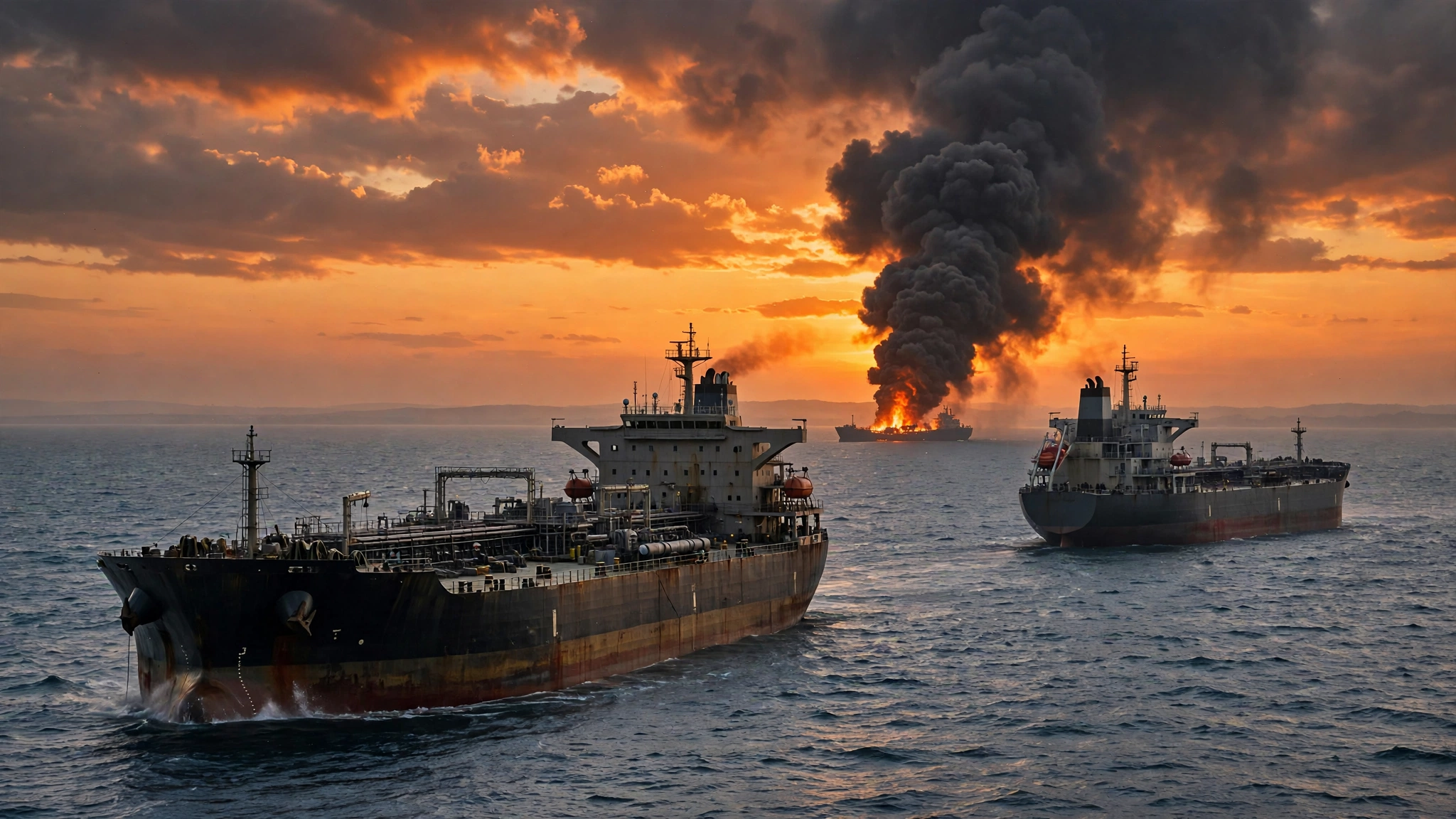
Strait of Hormuz tankers burning was the grim picture in the Gulf early Thursday, as three ships were reported on fire near the world’s most important oil chokepoint and Iran rejected Washington’s latest reply in talks to end the war, dimming hopes that the midterm elections would bring the fighting closer to an end.
Iran’s Revolutionary Guard navy said two tankers and a tug were burning inside the strait, and later said another tanker had struck a mine and was burning east of it, according to CBS News. Britain’s maritime security agency, UKMTO, separately reported a tanker hit by two projectiles about 50 nautical miles north of Madinat ash Shamal, on Qatar’s northern coast.
The reports could not be independently confirmed, and they came from the Iranian force that has itself attacked shipping in the waterway. Al Jazeera reported that Iranian forces said as many as five tankers and a tug had caught fire in several incidents.
Strait of Hormuz tankers burning as talks stall
On the diplomatic side, the news was no better. Mohsen Rezaei, secretary of Iran’s Supreme National Security Council, called the American reply “not convincing.” A statement attributed to Supreme Leader Mojtaba Khamenei said anyone expecting a change in U.S. policy was “seriously mistaken.”
Iran’s chief negotiator, Mohammad Bagher Ghalibaf, read the midterm results as Americans saying no to war. Qatari mediators expect an answer within about 36 hours on a new proposal, Reuters reported, citing an official.
Iran has laid out multiple conditions for reopening the strait, broadly including sanctions relief, an end to the U.S. naval blockade of Iranian ports, the release of frozen Iranian assets, a regional ceasefire, and war reparations, according to PBS NewsHour. The strait has been effectively blockaded since the IRGC resumed its closure on July 14, after the collapse of an earlier ceasefire framework.
Oil prices climb after falling below $100
Brent crude, which had fallen below $100 a barrel on Wednesday for the first time since September, to about $94, down from its October 23 peak of $116, climbed back 2.2 percent on Thursday to about $96.70 after the ship reports, according to CBS News.
The strait normally carries about one-fifth of the world’s oil and liquefied natural gas in peacetime, making any disruption there a global concern. About 2,000 ships are currently stranded on either side of the strait, which has been almost completely closed since the war began on February 28, according to Al Jazeera.
Qatari and Pakistani mediators are working on a narrower interim deal that would trade a halt to attacks on shipping for an end to the U.S. blockade of Iranian ports, Reuters reported on November 4. No government has published the text of the American response to Iran’s conditions.
Fears of a return to wider war
The latest incidents follow a week of claims and counterclaims. President Trump announced a U.S. plan to guide stranded ships through the strait in an operation he called Project Freedom. Iran said ships trying to use the strait without permission from the Revolutionary Guard would be fired on.
On Monday, Iran’s Fars News Agency reported that a U.S. warship had been hit by two Iranian drones. The U.S. military’s Central Command denied a warship had been hit and said it had sunk vessels belonging to the Revolutionary Guard. Neither claim has been verified by independent observers.
Unnamed Pentagon officials told The New York Times on Wednesday that thousands of U.S. air and naval forces on more than a dozen ships and at bases around the Middle East are poised to resume major combat operations against Iran on President Trump’s orders. Iranian leaders have warned of repercussions if the U.S. or Israel pursue further military action.
- Ships reported burning: At least three, possibly five tankers plus a tug, near the Strait of Hormuz
- Diplomacy: Iran called the U.S. reply “not convincing”; Qatari mediators expect an answer within about 36 hours
- Oil: Brent crude rebounded to about $96.70 after falling below $100
- Context: The strait carries about 20 percent of the world’s oil and gas in peacetime
What to watch next
All eyes are now on the Qatari mediation effort and whether either side moves toward the interim deal. If the attacks on shipping continue, oil prices are likely to climb further, and the risk of a wider war will grow. If the mediators succeed, the strait could reopen to the shipping that the world economy depends on.
For now, with Strait of Hormuz tankers burning and talks stalled, the Gulf remains one of the most dangerous waterways on earth.
Sources: CBS News, Reuters, Al Jazeera, and PBS NewsHour reporting on the November 5, 2026 incidents.
1 thought on “Strait of Hormuz Tankers Burning as Iran Rejects US Reply”