
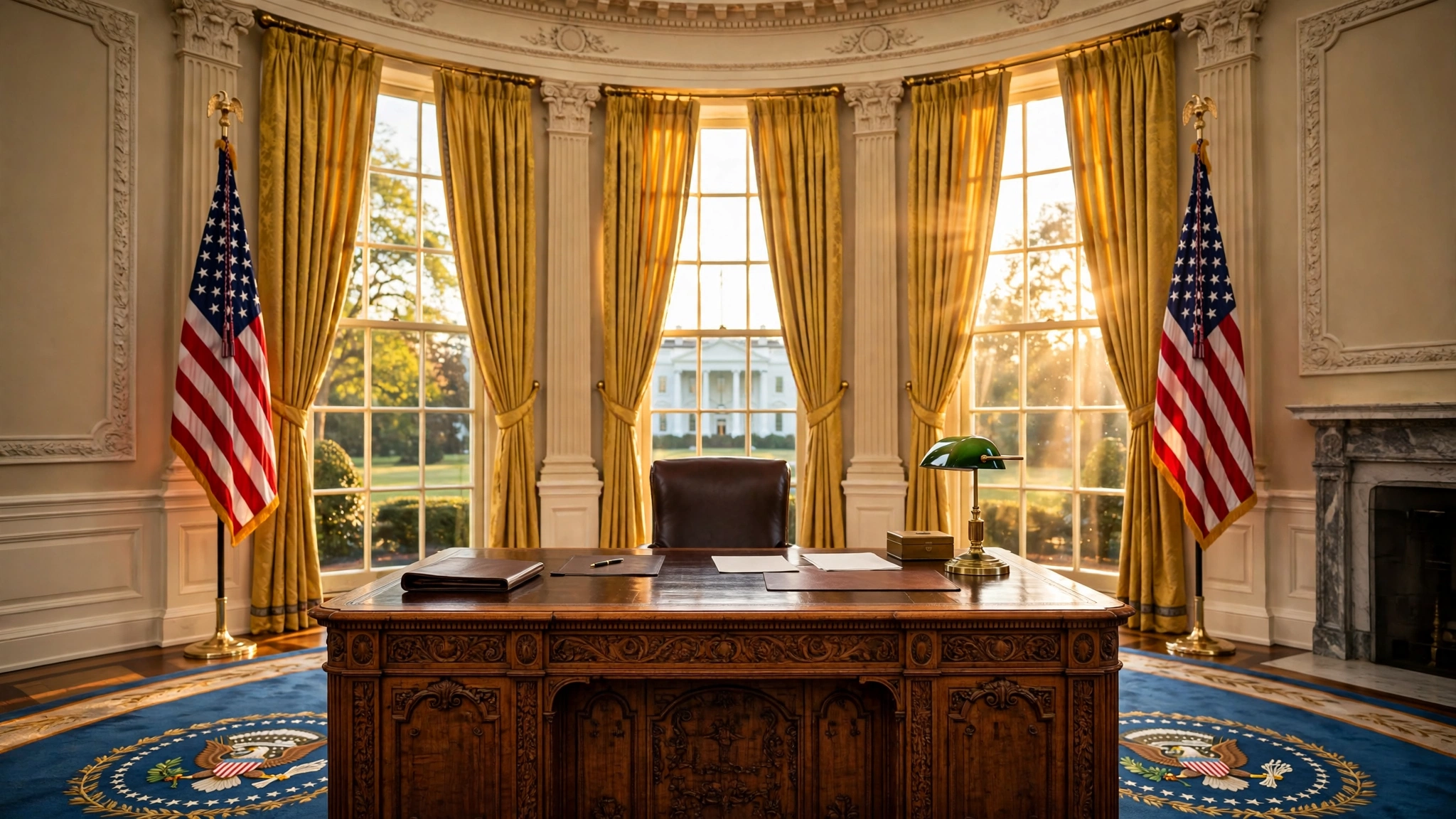
President Donald Trump signed a presidential proclamation Thursday afternoon establishing the Oval Office national monument, using the Antiquities Act to give the most famous room in the White House formal protected status. The proclamation also covers the Cabinet Room, according to reports of the signing.
The move places the Oval Office, the working office of every president since William Howard Taft, under the same law presidents have used for more than a century to protect historic landmarks and natural wonders, from the Grand Canyon to the Statue of Liberty.
The announcement came on the same day a federal judge temporarily blocked construction of Trump’s planned 250-foot triumphal arch in the capital, giving the president’s building ambitions a split verdict in a single afternoon.
What the Oval Office national monument proclamation does
The Antiquities Act of 1906 allows a president to declare national monuments on federal land to protect objects of historic or scientific interest. Trump used it to designate the Oval Office and the Cabinet Room as national monuments, a step no previous president has taken for a working room inside the White House.
The practical effects are largely symbolic. The Oval Office is already one of the most protected rooms in the country, and the proclamation does not change who works there or how the White House operates. But the designation makes it harder for a future president to alter the room’s historic character without addressing the monument status.
Supporters of the move say it recognizes the Oval Office’s place in American history. The room has been the setting for wartime addresses, crisis meetings, and some of the most consequential decisions in the nation’s history. Critics questioned whether the Antiquities Act was intended for an active office, and whether the designation was a distraction from the midterm results.
Judge blocks the 250-foot arch
Hours before the proclamation, a federal judge temporarily blocked construction of Trump’s planned 250-foot triumphal arch in Washington. The arch, which the president has promoted as a monument to American greatness, had drawn criticism from preservationists and some lawmakers who said it would clash with the capital’s existing memorials.
The court’s temporary order pauses construction while the legal challenge proceeds. The administration has not said whether it will appeal, and the future of the arch project remains uncertain.
A White House reshaped
The proclamation is the latest in a series of changes Trump has made to the White House and its grounds during his second term. The president has overseen a major renovation of the East Wing, including a new ballroom, and has redecorated the Oval Office itself with gold accents and portraits.
Preservation experts have watched the changes closely. The White House is both a working office and a historic home, and every president leaves a mark on it. Trump’s changes have been among the most extensive in decades, and the monument designation now adds a formal layer of protection to the rooms he has reshaped.
The move also fits a broader pattern. Trump has used presidential proclamations aggressively in his second term, from tariffs to land designations, testing the limits of executive power. The Oval Office proclamation is unusual even by that standard, because it applies a conservation law to the president’s own workplace.
What happens next
Legal experts say the monument designation is likely to stand, since courts give presidents wide latitude under the Antiquities Act. A future president could revoke or shrink the monument, as Trump himself did with some monuments in his first term, but doing so would be politically sensitive.
- What was designated: The Oval Office and the Cabinet Room
- The law used: The Antiquities Act of 1906
- When: Thursday afternoon, November 5, 2026
- Also Thursday: A federal judge temporarily blocked the planned 250-foot triumphal arch
Reactions from Washington
Reaction in Washington split along familiar lines. Republican lawmakers praised the designation as a fitting honor for a room that has hosted history, while some Democrats called it a vanity project and questioned the use of a conservation law for a room the president works in every day. Preservation groups were more measured, noting that the Oval Office has been altered by nearly every president and that formal protection could help preserve its historic features for future generations. The White House Historical Association, which documents the history of the executive mansion, has long described the Oval Office as the most famous office in the world, a room whose design has evolved from Taft’s original in 1909 through renovations by nearly every administration since.
For now, the Oval Office joins the list of more than 130 national monuments across the country, though it is by far the smallest and the most closely guarded. Whether the designation is remembered as a fitting tribute or a political gesture will depend on how history judges the presidency it honors.
Sources: Associated Press and White House reporting on the November 5, 2026 proclamation and court order.