
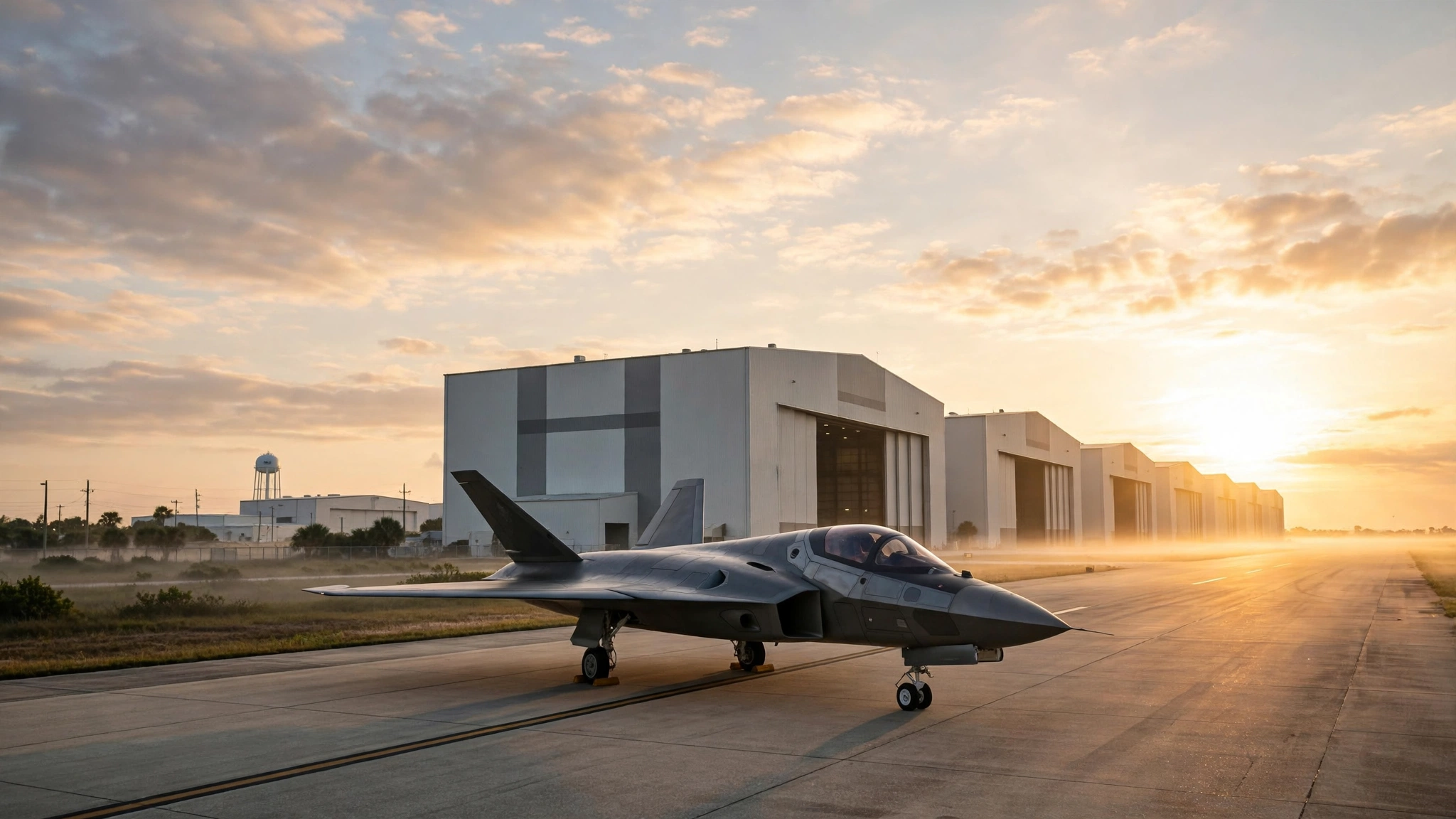
NASA X-70 Fractal is the name of the space agency’s newest experimental aircraft, unveiled Wednesday at the UP.Summit at Kennedy Space Center in Florida. The crewed X-plane is designed to test advanced flight-control systems and explore new levels of aircraft maneuverability, with its first flight expected within two years.
NASA Administrator Jared Isaacman announced the aircraft, describing it as a flexible research platform that will let engineers test emerging aviation technologies in real flight rather than relying only on simulations or ground-based experiments.
“The X-70 Fractal gives NASA a crewed, high-performance platform to test advanced flight-control, maneuverability, and other cutting-edge technologies in real flight,” Isaacman said. “We expect her first flight under the NASA banner within the next two years, and X-70 is just one part of this new beginning for aeronautics.”
What the NASA X-70 Fractal can do
The X-70 is not a commercial passenger aircraft or a conventional military fighter jet. Its primary role is experimental flight research, continuing a tradition that stretches back to the rocket-powered X-1 that first broke the sound barrier in 1947.
NASA has released the following design figures for the aircraft:
- Takeoff weight: 10,000 pounds (4,536 kilograms)
- Cruising speed: Mach 0.75, about 75 percent of the speed of sound
- Ceiling: 45,000 feet (13.7 kilometers)
- Range: More than 1,500 nautical miles (about 1,726 miles)
- Payload: Up to 2,000 pounds of experimental equipment, carried internally or externally
The aircraft’s modular design is central to its purpose. Engineers will be able to swap internal and external payloads quickly between experiments, letting research teams move from one test to another without rebuilding the aircraft. Isaacman said that flexibility would allow NASA to move quickly from one experiment to the next.
A new beginning for NASA aeronautics
The X-70 is the first in a broader expansion of NASA’s X-plane portfolio under Isaacman, signaling a renewed focus on aeronautics research at an agency often associated mainly with spaceflight. Another experimental aircraft is expected to be announced soon, according to reports from the summit.
The X-plane program has produced some of aviation’s most important breakthroughs. The X-15 explored hypersonic flight in the 1960s, and the X-59, a quiet supersonic research aircraft, completed its first flight in late 2025. The X-70 is a separate program from the X-59, focused on flight control and maneuverability rather than supersonic speed.
NASA has not disclosed who is building the X-70, its final airframe configuration, the program’s cost, or a detailed flight-test schedule. The agency released a computer-generated image of the aircraft alongside the announcement, but that image should not be treated as a confirmed representation of the final design.
Why a crewed research plane still matters
In an age of drones and computer simulation, some might ask why NASA needs a piloted experimental aircraft at all. The answer, according to the agency, is that some flight-control ideas can only be proven with a human pilot in the loop, testing how an aircraft actually responds in the air.
The X-70’s rapidly reconfigurable flight controls will let researchers explore maneuverability in ways never before demonstrated in crewed flight, NASA said. The lessons could eventually shape the design of future airliners, making them safer, more efficient, or more agile.
The aircraft will be based at Kennedy Space Center, where NASA is hosting its Max Power air show at the Shuttle Landing Facility this weekend. More details about the X-70 program are expected to emerge there.
What happens next
NASA expects the X-70 to make its first flight under the agency’s banner within the next two years. Before then, engineers will finalize the design, build the aircraft, and begin ground testing.
How the NASA X-70 Fractal fits the X-plane legacy
The X-plane series has shaped aviation for nearly 80 years. The Bell X-1 broke the sound barrier in 1947 with Chuck Yeager at the controls, the X-15 reached the edge of space in the 1960s, and more recent programs have tested blended wing bodies, quiet supersonic flight, and electric propulsion. Each aircraft was built to answer one question that could not be answered on the ground, and the X-70 follows that tradition by asking how far flight control can be pushed when the aircraft itself can be reconfigured between flights. Engineers say the data gathered from the program could inform everything from the handling of future passenger jets to the design of autonomous cargo aircraft, where advanced flight-control software will matter more than raw speed or altitude.
For aviation watchers, the unveiling is a reminder that NASA’s aeronautics work, often overshadowed by its space missions, remains a source of real innovation. The NASA X-70 Fractal may never carry passengers, but the technologies it tests could shape the aircraft that do.
Sources: NASA announcement, The War Zone, Flying Magazine, and Business Today reporting on the November 4, 2026 unveiling.