
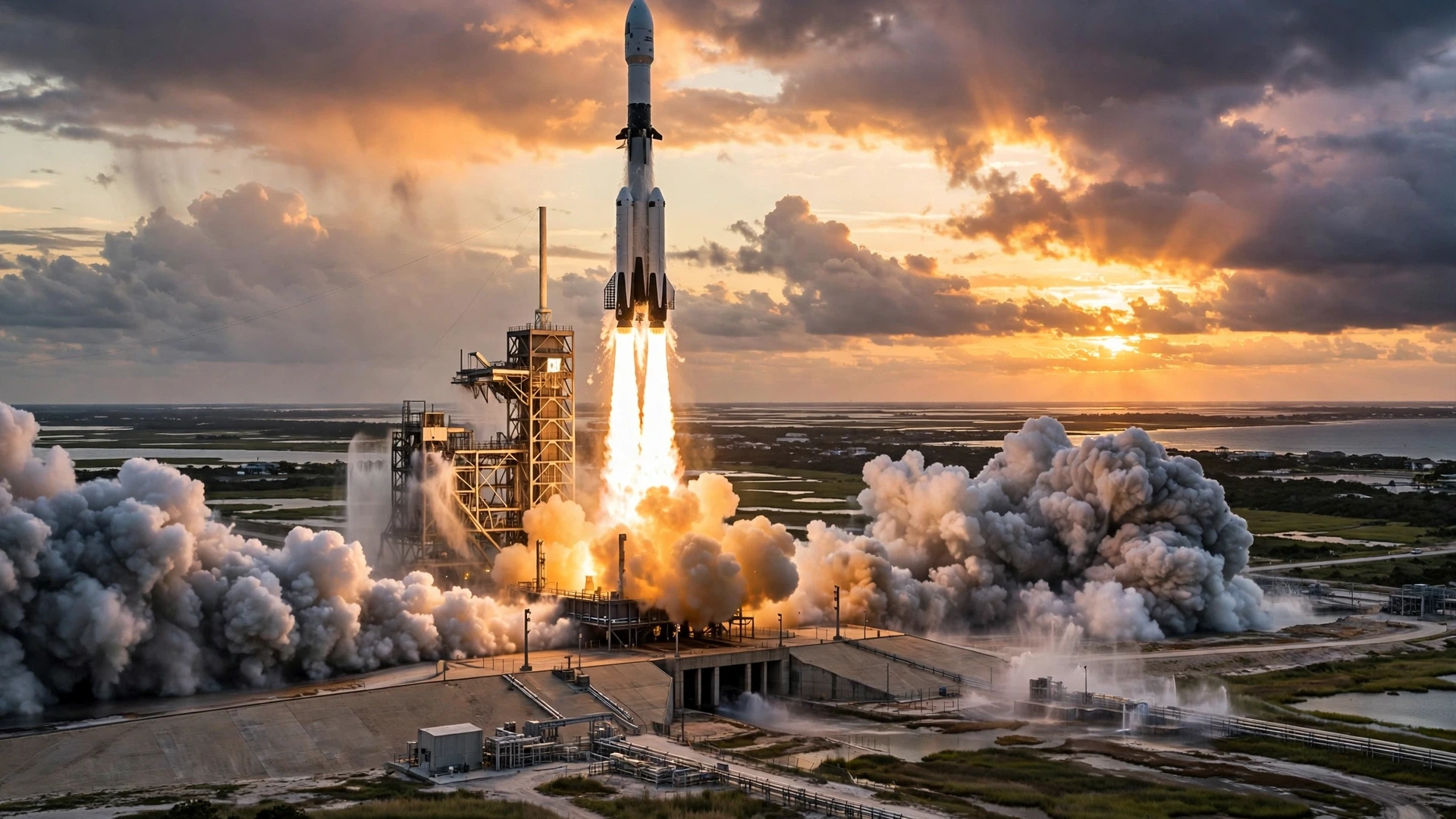
Starship Flight 15 reached orbit on Friday, November 13, delivering 26 Starlink satellites to space, but the mission fell short of its boldest goal when its Super Heavy booster diverted from a planned catch at the launch tower and splashed down in the Gulf of Mexico in a burst of flame. The upper stage of the rocket is still in orbit, with an attempt to catch it at the launch tower scheduled for Saturday afternoon.
The roughly 407-foot rocket lifted off from SpaceX’s Starbase facility in South Texas at 5:47 p.m. Eastern time. It was the company’s most ambitious Starship flight to date, an attempt to demonstrate that the revolutionary rocket is fully reusable by recovering both its first and second stages at the launch pad. Only the second half of that plan is still in play.
What happened on Starship Flight 15
About six and a half minutes after liftoff, the Super Heavy booster, known as Booster 22, was supposed to return to the launch pad and be caught by the tower’s mechanical arms. Instead, flight controllers diverted it to an offshore splashdown. SpaceX commentator Dan Huot said the booster aborted itself after detecting a guidance, navigation and control issue during its coast back toward land, which put it into its contingency landing offshore.
The booster exploded and disappeared from view before appearing to rise back out of the sea as remaining propellants burned off, according to Spaceflight Now. Three previous boosters have been caught by the launch pad tower, but the Version 3 Super Heavy has yet to make a successful return. The 236-foot booster, powered by 33 methane-burning Raptor engines, was the first of the upgraded design to attempt a catch.
SpaceX has not said why the booster was diverted beyond the guidance issue, and it has not said whether the booster was recovered. The company later posted photos of the booster’s landing burn and splashdown.
Starship Flight 15 reaches orbit and deploys Starlink satellites
While the booster was lost, the upper stage, known as Ship 42 and nicknamed “Don’t Panic,” performed as planned. Starship reached orbit at about 6:13 p.m. Eastern, only the second time the company has put the vehicle into orbit, at an altitude of about 275 kilometers. It then began deploying its payload of 26 upgraded Starlink V3 internet satellites, releasing them over 42 minutes starting 35 minutes after launch. SpaceX confirmed that all 26 satellites were in orbit by Friday evening.
The mission is not over. Ship 42 entered a long coast phase of up to 14 orbits of the planet, lasting about 22 hours. If all systems needed to guide it through the atmosphere remain healthy, SpaceX plans to bring it back to Starbase for a catch attempt at about 4:17 p.m. Eastern on Saturday, November 14. SpaceX has already caught boosters, but it has never caught the upper stage.
The company said before launch that it would attempt a catch only if all systems were healthy, and it has options to end the mission early with splashdowns off Hawaii or Chile if there is any doubt about the safety of a landing attempt at Starbase. The planned return path would take Starship over land for the first time during its approach to the launch site.
Why full reusability matters for SpaceX
Starship is the largest and most powerful rocket ever flown, and SpaceX’s goal is to make both of its stages reusable, like an airplane, so the vehicle can fly again with minimal refurbishment. Recovering the booster and the ship at the launch tower is central to that plan, and Flight 15 was designed to prove both halves of it in a single mission.
The flight also carried a practical payload. The 26 Starlink V3 satellites are the latest version of SpaceX’s internet constellation, larger and more capable than earlier models, and their deployment showed that Starship can carry out real orbital work while testing its recovery systems.
For now, the mission is a partial success: the payload is in orbit, the ship is healthy, and the most ambitious maneuver of all, the first-ever catch of the upper stage, is still ahead. SpaceX said the spacecraft and its heat shield are healthy as it coasts in orbit, and the company will decide on Saturday whether the catch attempt goes ahead.
2 thoughts on “Starship Flight 15 Reaches Orbit as Booster Splashes Down”