
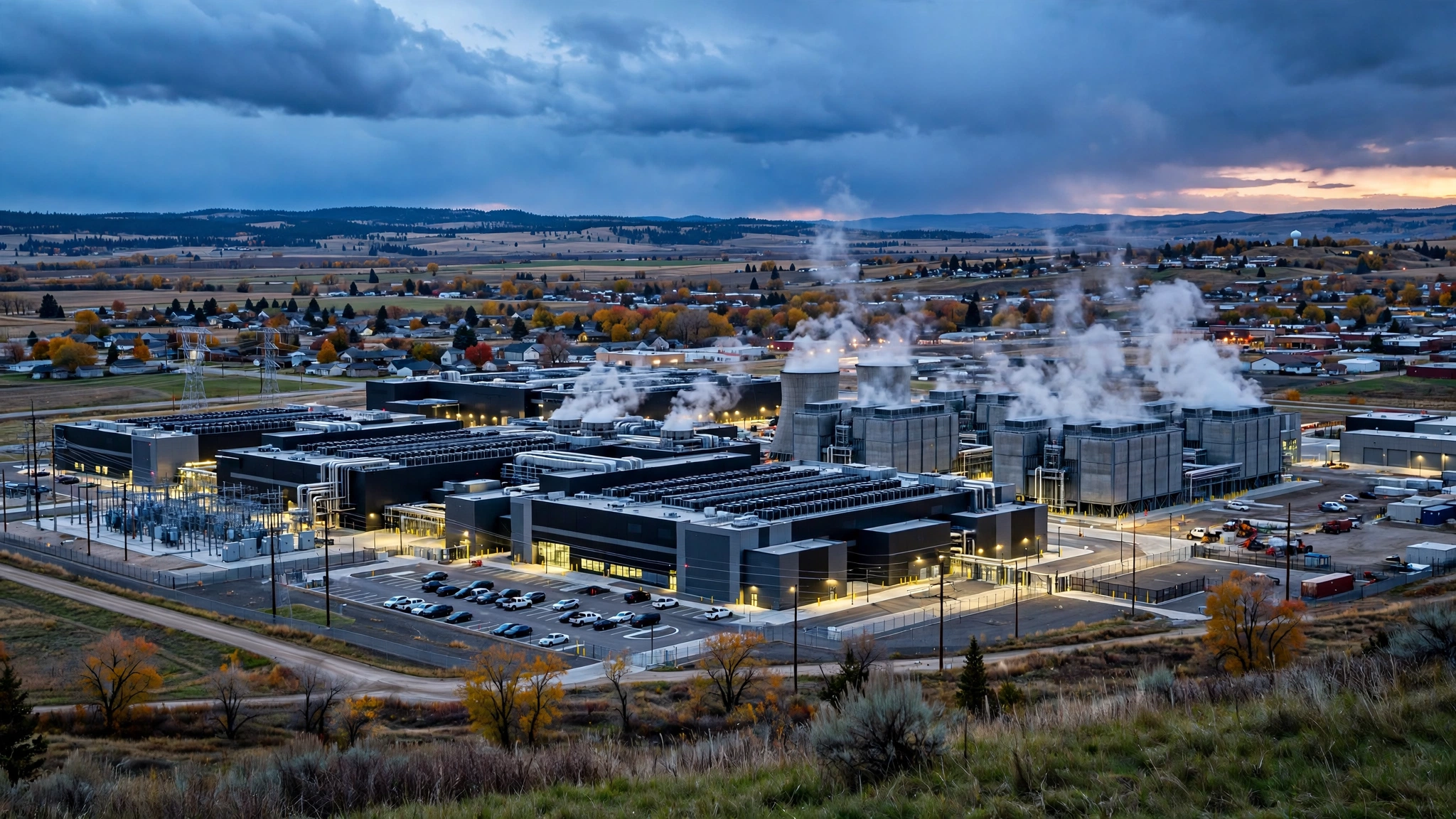
American voters used Tuesday’s midterm elections to deliver a sweeping rebuke to the data centres that power artificial intelligence, rejecting the facilities in nearly every local vote where the issue appeared on the ballot. The AI data centers ballot results, counted across 10 states, amount to the most significant popular verdict yet on the tech industry’s massive infrastructure buildout.
Ballotpedia’s tracker counted 41 local data-centre measures on the November 3 ballot. Updated results show that 40 of the 41 went the way of tighter limits, either by approving bans, moratoriums and new requirements or by rejecting measures that would have helped data centres get built. Counting six votes decided earlier in the year, 46 of the 47 data-centre measures decided in 2026 have favoured limits.
The New York Post, using a broader count, put the figure at at least 50 ballot measures, with voters deciding against data centres in 47 cases and three outcomes still pending as of Wednesday afternoon. By any count, the scale of the rejection was extraordinary, and the tech industry’s plans for a rapid expansion of AI infrastructure now face a new and powerful obstacle: the voters themselves.
Ohio led the backlash
Ohio accounted for the largest share of the votes, with 21 measures on the ballot, more than any other state. Illinois had seven, Maine four and Kansas three, with the remaining measures spread across California, Florida, Nevada, New Jersey, North Dakota and Wisconsin.
Around Columbus, voters went against data centres in Ashville, Pataskala, Grove City, Sunbury and Granville, according to unofficial counts reported by NBC4. In Trenton, Ohio, a ban aimed at keeping out an 18-building Amazon Web Services data centre passed by about 80 percent to 20 percent, according to Fortune, although it is unlikely to affect a four-building AWS campus already under construction nearby. In Sunbury, a charter amendment banning data centres of 25 megawatts or more appeared to have passed.
In Piqua, Ohio, where Meta plans a data centre on about 607 acres, voters approved a charter ban on data centres with a load above 25 megawatts by 66.7 percent to 33.3 percent. In Edgewater, Florida, voters approved an amendment embedding a ban on data centres directly into the city’s charter. Voters in Alhambra, California, voted to ban data centres in the city, while voters in Bloomington, Illinois, advised city leaders to impose a moratorium on large-scale data centres.
The lone exception was in Harwood, North Dakota, where voters rejected extra review requirements for big industrial projects, including data centres, by 325 votes to 105. The secretary of state’s office said 75 percent of the 430 people who voted rejected the amendment.
Governors’ races turned on the issue
The backlash was not limited to local ballots. In the most closely watched governors’ races, Democrats who campaigned on pausing data-centre development beat Republican rivals who proposed more moderate approaches.
In Texas, the state with the most planned AI data-centre capacity, Democrat Gina Hinojosa defeated Governor Greg Abbott after promising a moratorium on new data-centre construction, stricter rules on their water and power use, and an end to tax breaks for the industry. Abbott, who once said he wanted Texas to be the “epicentre of AI development,” had announced a moratorium of his own in August, which Hinojosa dismissed as an “election year pause.”
A survey from the University of Houston found that more than 80 percent of Texans were concerned about the impact data centres could have on the cost and quality of living, and 79 percent support limiting the number of data centres that can be built.
In Georgia, Keisha Lance Bottoms won the governor’s race after calling for a pause on new data centres, leading Republican Rick Jackson by 54.2 percent to 45.8 percent with 98.2 percent of the expected vote counted, according to NBC News. In Ohio, Democrat Amy Acton beat Vivek Ramaswamy by 52 percent to 44.7 percent, according to NBC News, after supporting a conditional moratorium to ensure data centres cover 100 percent of utility costs and build with union labour.
In Michigan, Democratic governor-elect Jocelyn Benson pushed for a moratorium until the state creates rules forcing AI infrastructure developers to negotiate with communities and pay for power. In Nevada, Democrat Aaron Ford ousted incumbent Republican Governor Joe Lombardo after running on pausing tax abatements and opposing data centres on public lands.
Why voters said no
The opposition was driven by concerns about electricity bills, water use and the sheer scale of the buildout. In a CNBC voter poll, 56 percent of voters said data centres were a crucial or major factor in their decision, with Democrats ranking the issue higher than Republicans.
An analysis from Cleanview Energy, a company that tracks US power infrastructure and data-centre development, shows that 41 percent of the country’s data centres could be paused as a result of the election outcomes. The stakes are enormous: OpenAI announced in August that it had secured 8 gigawatts of computing capacity at the PORTS-Pike Technology Campus in Ohio, described as the largest planned AI data-centre campus in the world.
The message voters sent was clear even to Elon Musk, who appeared to be writing off the future of data centres on Earth as results rolled in on election night. “Data centers in space looking pretty appealing right now,” he posted on X.
What it means for the AI boom
Supporters of the buildout argue that the facilities are essential to meet demand for artificial intelligence and that restrictions will push investment overseas. Critics say the industry has asked communities to absorb the costs while the benefits flow elsewhere. The governors elected on Tuesday now hold the power to shape rules on power, water and community consent.
Every data-centre measure decided earlier in 2026 also went for tighter limits, Ballotpedia found, including a ban in Monterey Park, California, that won 88.3 percent of the vote. Tuesday’s results suggest that was not an outlier but the beginning of a pattern.