
Trump Ends 50% Canada Tariffs to Help Maine Farmers
The Trump Canada tariffs relief order signed on Friday removes 50% duties on a set of Canadian agricultural and forestry products, delivering a targeted win for Maine businesses and farmers just days before the November 3 midterm elections.
President Donald Trump signed the order after sustained lobbying from Senator Susan Collins, the Maine Republican locked in a tight re-election fight. According to Reuters, the White House said the changes take effect on October 30, four days before voters head to the polls.
The move is the latest twist in a tariff fight that has strained relations with Canada, America’s northern neighbor and one of its largest trading partners, while raising costs for U.S. companies that depend on Canadian goods. Maine, which shares a long border with Canada, has felt the pressure more directly than most states.
What the Trump Canada tariffs order changes
Under the order, the 50% tariff is lifted from a specific list of Canadian products. According to the White House, the exempted items include:
- Plywood sheets and certain paper products
- Certain machinery and refrigeration equipment
- Packing crates and boxes
- Fresh and dried seaweed
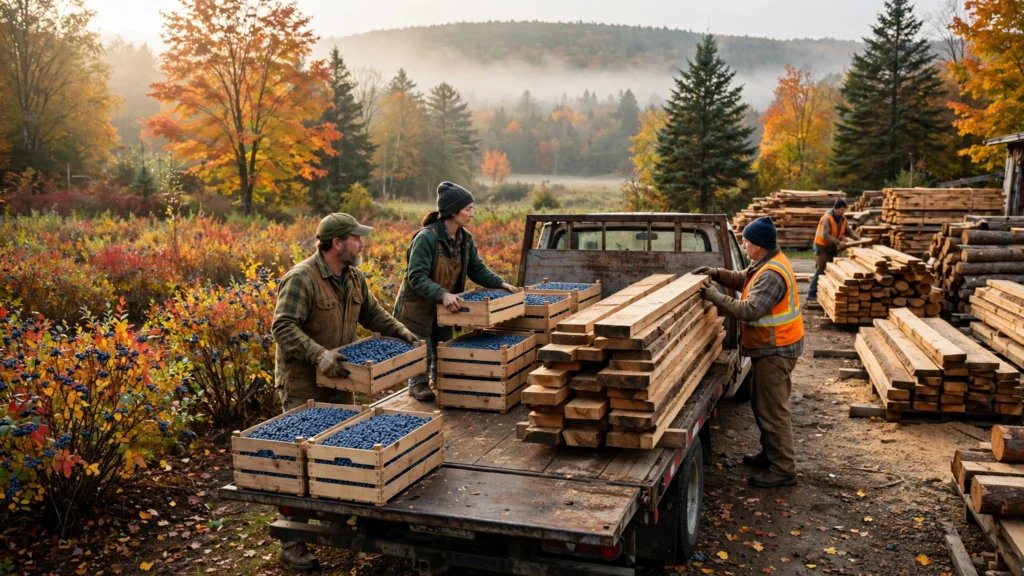
Those products matter disproportionately in Maine. Collins said the relief will aid the state’s blueberry, potato, apple and seaweed producers, many of whom rely on Canadian equipment, packaging and materials that are difficult or expensive to source elsewhere.
“These producers are a vital part of our state’s economy and support our rural and coastal communities,” Collins said. “Many of our farmers and growers rely on specialized equipment, packaging materials and other products from Canada that are either unavailable from American suppliers or cannot be replaced without incurring significant expense.”
A close race in Maine
The political context is hard to miss. Collins is seeking re-election in a race that polls indicate is very close, with Democrat Troy Jackson challenging her for the seat. The two sparred over tariffs at an October 6 debate, according to Reuters.
With Republicans fighting to retain control of Congress in the midterms, the White House has faced pressure from members of its own party in states exposed to the tariff fight. Maine’s economy is deeply intertwined with Canada’s, from cross-border supply chains to seasonal farm labor and forestry trade.
Collins had urged the administration to address tariffs on products affecting Maine companies and farmers, and the order follows that lobbying directly. The timing — days before the election — has drawn attention from both parties, with supporters calling it responsive governing and critics describing it as election-season relief.
New tariffs added to offset the relief
The order is not a straightforward tariff cut. Trump also added a number of Canadian products to the 50% tariff list to offset the relief provided, according to the White House. The newly tariffed items include carpets, paints, shampoos, cocoa powder, wooden coffins, ice cream sticks, air-conditioning machines, chest freezers, archery equipment and canoes.
That trade-off reflects the administration’s broader approach to tariffs as a negotiating tool: relief in one area paired with pressure in another. The 50% tariffs on Canadian imports were imposed in August on $20 billion worth of goods, according to reporting on the order.
For Maine producers, the practical question is whether the exemptions cover the inputs they actually buy. Packaging crates and boxes, refrigeration equipment and machinery are central to getting blueberries, potatoes and apples from fields to markets, and seaweed is a growing coastal industry in the state.
What it means for farmers and businesses
For farmers, tariffs on equipment and packaging act like a tax on every shipment. When a Maine blueberry grower buys Canadian crates or a potato processor imports refrigeration equipment, a 50% duty can erase thin margins in a business where prices are set by global markets.
Forestry businesses face a similar squeeze. Plywood and paper products cross the border in both directions, and tariffs disrupt supply chains that were built over decades of integrated North American trade. Removing the duty on plywood sheets and some paper products should ease costs for builders, mills and packaging firms.
Business groups in border states have long argued that tariffs on close allies create collateral damage for American firms. The Maine order is a concession to that argument, at least for the products on the exemption list.
Broader U.S.-Canada trade tensions
The tariff fight with Canada has been one of the most contentious trade disputes of Trump’s second term. Canada is the largest foreign supplier of energy to the United States and a major source of lumber, minerals and agricultural products.
American businesses in states beyond Maine have also complained about higher costs from the duties, and Canadian officials have responded with their own retaliatory measures in past rounds of the dispute. Friday’s order does not resolve the broader disagreement, but it signals that the administration is willing to carve out exceptions where domestic political and economic pressure is strongest.
Whether the exemptions survive beyond the election is an open question. Trade orders can be revised, and the administration has repeatedly adjusted tariff lists throughout the year. For now, Maine producers have a window of relief — and a concrete example to point to when they argue that tariffs on Canadian goods hurt American businesses as much as they hurt Canadian exporters.
What to watch next
The changes take effect on October 30, and the first test will be whether Maine businesses see lower costs on the exempted products in the weeks that follow. The second test comes on November 3, when voters decide whether Collins keeps her seat — and whether tariff relief helped her case.
Trade watchers will also be watching for further adjustments to the tariff list. If other states and industries press for similar exemptions, Friday’s order could become a template for targeted relief. If not, it may stand as a one-off intervention tied to a single competitive Senate race.