
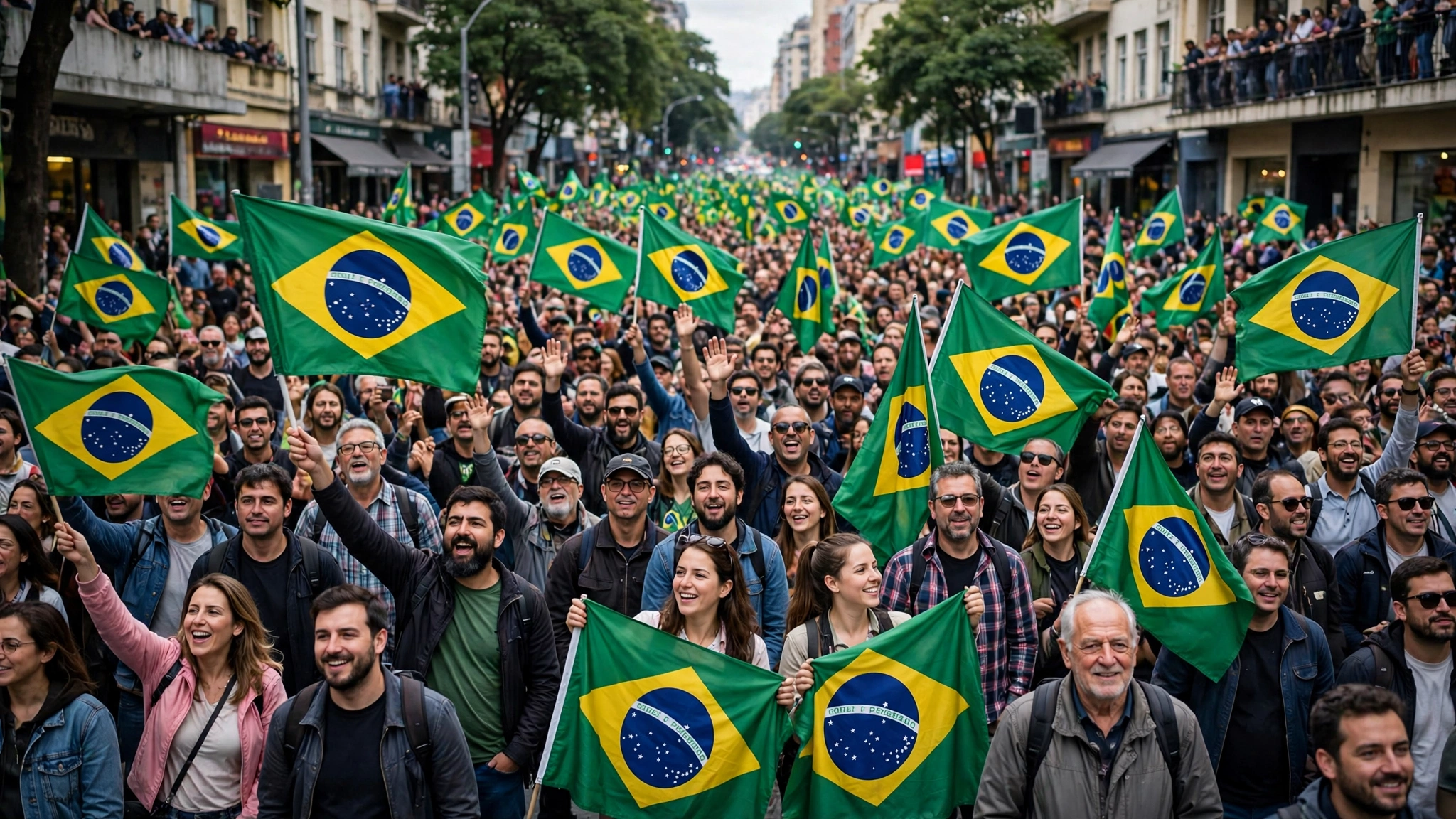
Brazilian President Luiz Inácio Lula Wins a historic fourth term on Sunday, October 25, defeating conservative Senator Flávio Bolsonaro in a runoff election that reversed his first-round deficit and interrupted a rightward shift across Latin America.
The Lula Brazil fourth term victory was confirmed with 51.76 percent of the valid votes, compared with 48.24 percent for Bolsonaro, according to Brazil’s electoral court and reporting by Reuters, CNN and USA Today. Lula, 80, won by about 4.4 million votes in the final count.
It was the first time since the return of direct presidential elections in 1989 that a candidate has won the presidency after finishing second in the first round. Bolsonaro had emerged as the leading candidate in the first round earlier in October, making Lula’s runoff win a stunning turnaround.
In a triumphant victory speech, Lula told supporters: “People went to vote because we convinced them it was important to preserve democracy.” He added: “This country doesn’t accept being anybody’s colony.”
Lula Wins: A campaign dominated by cost of living, crime and corruption
The campaign was dominated by concerns over the cost of living, crime and corruption, according to CNN and other coverage. Lula, a former factory worker who first governed Brazil from 2003 to 2010 and returned to office in 2023, faced a tough reelection battle because of concerns about living costs and security.
Bolsonaro, 45, a Rio de Janeiro senator and the eldest son of former President Jair Bolsonaro, made a tough-on-crime approach the cornerstone of his campaign and pledged to bring down food costs. He also touted his close relationship with the Trump administration in the United States.
Both candidates had faced corruption allegations involving family members and allies. Lula spent more than a year in prison on corruption convictions that were eventually annulled, while Bolsonaro’s campaign was dogged by questions about his family’s affairs. Those histories did not prevent either man from reaching the runoff, but they shaped a bitter and personal campaign.
Affordability and Brazil’s relationship with the United States were prominent issues in the runoff, according to USA Today. Lula accused the American government of intervening to help his opponent, while Trump did not offer an official endorsement for Bolsonaro ahead of the election, though he had endorsed candidates in other Latin American elections and openly favored conservative governments in the hemisphere.
Lula Wins: Bolsonaro rejects the result and promises a legal challenge
Bolsonaro said he would not accept the results and would mount a legal challenge. “It is impossible to recognize the election result given how these events unfolded,” he told supporters in the capital, Brasilia, after Lula’s victory was declared. “We will take legal action. We will ask for this election to be annulled.”
His challenge centers on a Supreme Court decision to extend voting by two hours on election day, after last-minute pleas from both candidates to electoral authorities. The election day was described by Bloomberg and other outlets as messy, with allegations of voter suppression alongside the extended hours.
Whether the legal challenge succeeds is uncertain. Brazil’s electoral court declared Lula the winner, and global leaders quickly congratulated him. Mexican President Claudia Sheinbaum wrote: “Long live democracy, the people of Brazil won. Congratulations, President Lula!” Presidents of Paraguay, Uruguay, Bolivia and Cuba also sent congratulations, according to Reuters’ roundup of reactions.
In Rio de Janeiro, Lula’s supporters were seen hugging, beeping car horns and raising the “L” sign. In Belo Horizonte, capital of the key swing state of Minas Gerais, supporters chanted and sang following the victory.
Lula Wins: What Lula’s win means for Brazil and the region
Lula’s victory interrupts a string of victories for right-wing candidates in Latin America that had seen Trump acquire ideological allies across the region in Bolivia, Chile, Costa Rica, Colombia, Ecuador, Honduras and Peru, according to USA Today. His win denies Trump a new partner in the Western Hemisphere, where the United States has shifted resources and attention with boat strikes in the Caribbean, military intervention in Venezuela, and the formation of a Shield of the Americas security umbrella over the past year.
For markets, the result was a blow to investors who had been banking on Bolsonaro to fix Brazil’s fiscal accounts. While Bolsonaro had yet to outline much of his proposal to cut spending, traders had piled into Brazilian markets on the hope he would be more committed to fiscal discipline than Lula, who has focused more on boosting growth through consumption than addressing Brazil’s fiscal situation. An exchange-traded fund tracking Brazilian stocks fell 13 percent in Japan, according to Bloomberg’s reporting, and Brazil-linked U.S. stocks sank on Monday.
Lula’s win also extends a political career spanning more than four decades. By the end of his new term, which is set to begin in January 2027, he will have been in power for 16 years — a record in Brazil’s democratic history, according to the Financial Express, and the second-longest tenure overall behind Getúlio Vargas.
After his reelection, Lula said: “I can assure you that we are going to change the way we govern this country. We are going to give the people a greater role in our decisions.” He thanked Brazilian youth who “took to the streets to defend democracy,” and pledged to work with the conservative Congress elected by Brazilians and govern for all 215 million citizens. He also called for regulation of digital platforms, saying Brazil had defeated foreign intervention through them. “Brazil is no one’s back yard,” he said, according to Business Today.
Lula Wins: What happens next
- Legal challenge: Bolsonaro’s team is expected to file for annulment, citing the two-hour voting extension.
- Transition: Lula’s new term is set to begin in January 2027, with a conservative Congress to negotiate with.
- U.S. relations: Washington and Brasilia will need to reset a relationship strained by the campaign’s accusations of intervention.
- Markets: Investors will watch Lula’s fiscal plans and cabinet picks for signals on spending and growth.
- Regional politics: Lula’s win gives Latin America’s left a major counterweight to the region’s recent rightward trend.
For American readers, Brazil’s election matters beyond its borders: Brazil is Latin America’s largest economy and democracy, a major trading partner, and a key player in climate, agriculture and regional security. Who governs it — and how that government relates to Washington — shapes the hemisphere.
Sunday’s result shows that, even after finishing second in the first round, Lula could still assemble a winning coalition in the runoff. Whether he can govern with that coalition, and whether Bolsonaro’s legal challenge gains traction, will define Brazil’s next chapter.
Key points
- Lula won a fourth term with 51.76% of the runoff vote, defeating Flávio Bolsonaro’s 48.24%.
- It is the first time since 1989 a candidate won after finishing second in the first round.
- Bolsonaro said he will ask for the election to be annulled, citing a two-hour voting extension.
- Lula’s term is set to begin in January 2027; he will have served 16 years in total.
- Markets fell on the result, with Brazil-linked stocks sinking on Monday.
Sources: Reuters, CNN, USA Today, Bloomberg, Financial Express, October 25-26, 2026.
1 thought on “Lula Wins Historic Fourth Term in Brazil Runoff Vote”