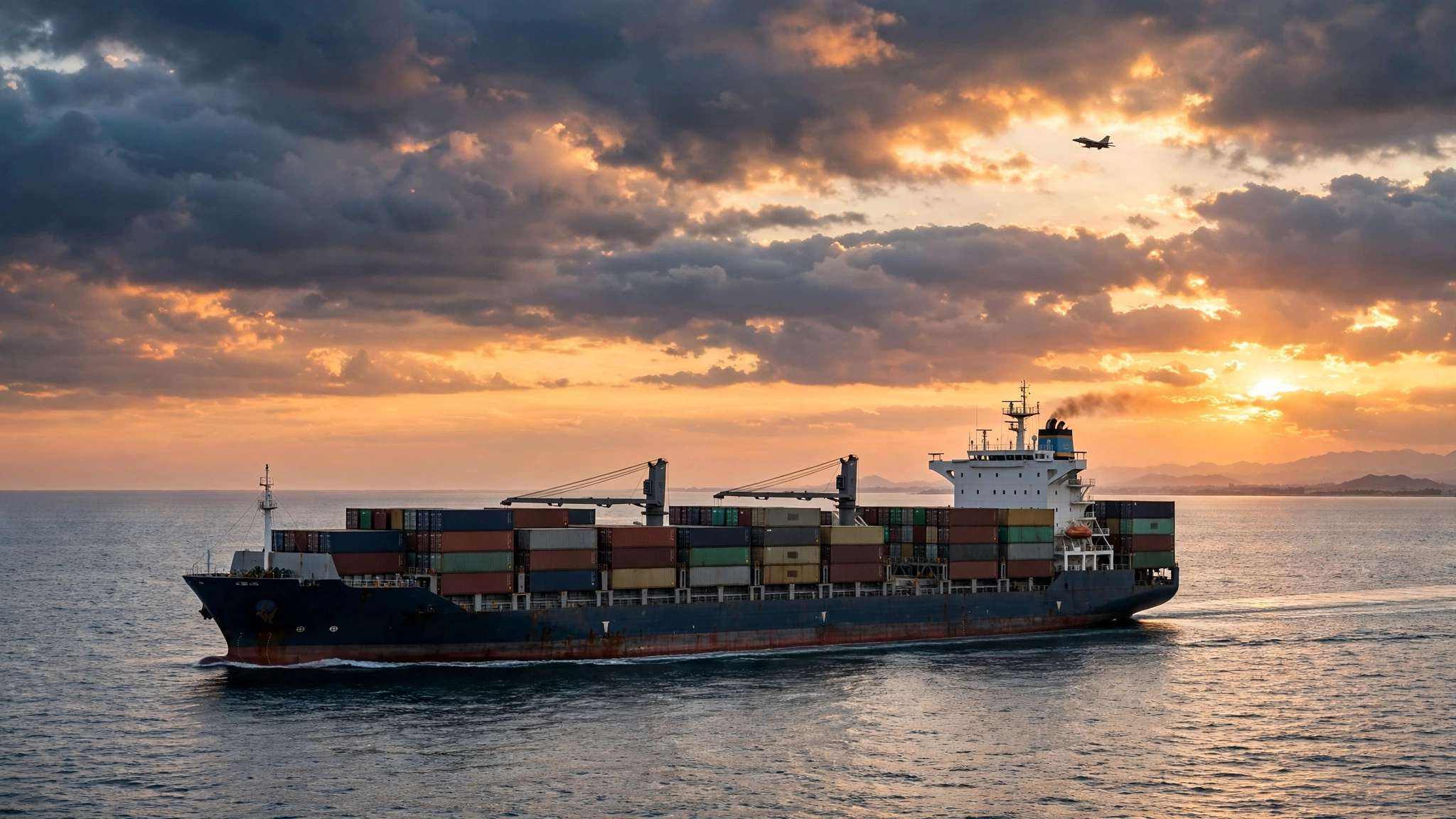
A U.S. military aircraft disabled a commercial cargo ship in the Gulf of Oman on Saturday after its crew ignored repeated warnings and tried to breach the American naval blockade of Iran, U.S. Central Command (CENTCOM) said. The strike on the St. Kitts and Nevis-flagged M/V Huda is the first time U.S. forces have disabled a ship under the blockade in nearly a month.
According to CENTCOM, the aircraft fired precision-guided munitions at the stern of the vessel after directing the crew to leave the targeted spaces on board. The command said the ship had called at an Iranian port and was trying to leave regional waters, making several attempts to get past the blockade. CENTCOM released a short video showing a munition striking the stern and an explosion.
The incident took place about 18 nautical miles east of Khor Fakkan, on the coast of the United Arab Emirates, according to a maritime advisory from United Kingdom Maritime Trade Operations. CENTCOM did not report casualties and did not say how badly the Huda was damaged or what happened to its crew.
What happened to the M/V Huda
The Huda is a 24,993-deadweight-tonne dry bulk carrier built in 1999 and managed from Turkey, according to the maritime publication The Maritime Executive. The publication said the ship did not appear to be under sanctions.
CENTCOM said the vessel’s civilian crew had ignored repeated warnings and tried several times to violate the blockade while departing regional waters. Before the strike, U.S. forces told the crew to abandon the targeted sections of the ship, a step the command said was taken to prevent casualties.
U.S. forces aim at the engine room, stern, or rudder of vessels that refuse to stop, a method designed to halt a ship without sinking it, according to the maritime publication Marine Insight. The same approach was used on October 10 against the Panama-flagged bulk carrier Ocean Molica, also in the Gulf of Oman. The Huda was the first ship disabled since that strike.
The blockade by the numbers
CENTCOM has enforced a maritime blockade on Iranian ports in the Strait of Hormuz since July, resuming the operation on July 14. According to the command, enforcement since then has resulted in 147 commercial vessels being redirected after complying with instructions, and five merchant ships being disabled for refusing to comply.
The command also says U.S. forces have destroyed 10 Iranian commercial oil tankers that it links to a shadow fleet run by the Islamic Revolutionary Guard Corps. CENTCOM estimates the blockade has prevented more than $25 billion worth of Iranian crude oil exports in recent months.
“U.S. forces continue to strictly enforce America’s naval blockade against Iran,” CENTCOM said in its statement, adding that commercial operators navigating the region should follow blockade instructions.
A wider escalation in the Gulf
The strike came on the same day CENTCOM announced a new step in the campaign. Admiral Brad Cooper, the CENTCOM commander, directed the formation of Task Force Iron Gate on November 7, a unit aimed at blocking Iran’s military supply routes across land borders and the Caspian Sea, according to Gulf News.
The same day brought reports of multiple explosions across strategic coastal locations in southern Iran, including Qeshm Island and the port of Jask, according to India TV News. Separately, the UAE National Guard said it rescued 22 crew members after a fire broke out aboard a cargo ship in the Gulf of Oman.
Tehran has warned of retaliation without geographical limits following renewed attacks, Gulf News reported, while Houthi forces in Yemen claimed attacks on Riyadh. The developments underline how the confrontation around Iran has widened beyond the Strait of Hormuz to shipping lanes, ports, and supply routes across the region.
What remains unresolved
Several basic facts about the Huda incident remain unclear. The public record does not yet show whether the ship remained afloat without assistance, whether its cargo posed an environmental risk, or where the crew went after leaving the targeted spaces. CENTCOM’s video and statement document the strike from the military’s perspective, but they are not a complete account of the incident.
The operation took place outside the narrowest part of the Strait of Hormuz, where months of attacks and restrictions have disrupted shipping. The Gulf of Oman has become a focal point of the blockade, with U.S. forces intercepting vessels as they try to enter or leave regional waters.
For shipping companies, the message is blunt: vessels that ignore blockade warnings risk being disabled. For the region, the strike is a reminder that the naval confrontation around Iran is intensifying, with direct military action against civilian shipping now a regular feature of the standoff.