
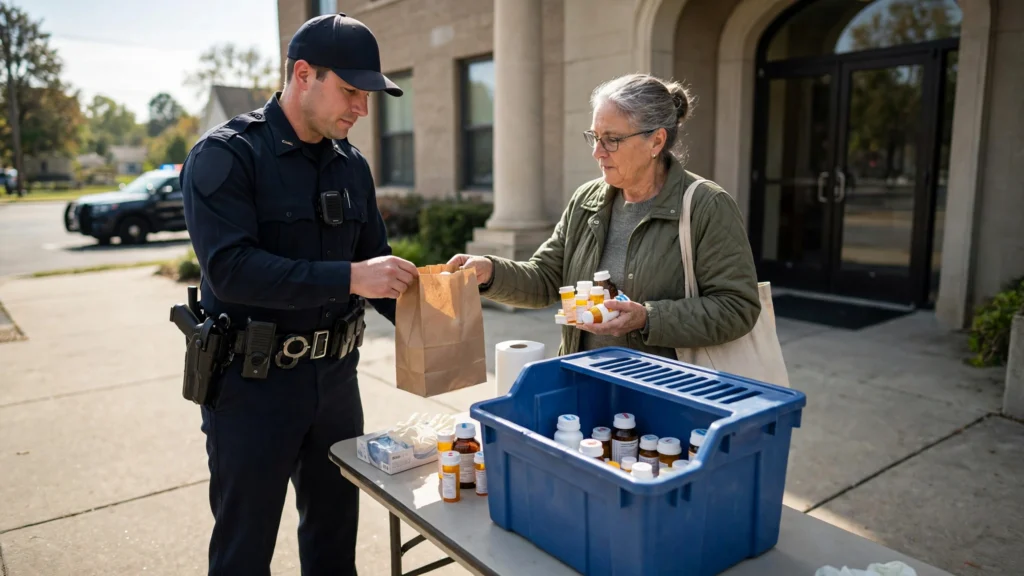
DEA Drug Take Back Day Opens Thousands of US Sites
Drug Take Back Day returns today, Saturday, October 24, giving Americans a free, anonymous way to clear unused, unwanted or expired prescription medications out of their homes before they can be misused, stolen or accidentally swallowed.
Collection sites across the country will be open from 10 a.m. to 2 p.m., staffed by the Drug Enforcement Administration and its local law enforcement partners. More than 4,200 drop-off locations took part in the most recent national events, and organizers say handing in unused medicines helps prevent theft, teen misuse and accidental exposure to children and pets.
Anyone can participate — no appointment, identification or questions asked. To find a site nearby, visit DEATakeBack.com.
What you can drop off
Collection sites accept tablets, capsules, patches and other solid forms of prescription drugs. Liquid medications, such as cough syrup, should remain sealed in their original containers with caps tightly secured to prevent leakage.
Sites will not accept syringes, sharps or illicit drugs. Residents are asked to remove or obscure personal information on labels before dropping off medicines.
Some local events add extra services. County programs in several states are pairing collections with Narcan training and community guidance on safe disposal, and some sites accept vaping devices when lithium batteries have been removed — though residents should check local guidelines first, as rules vary.
Why Drug Take Back Day matters
Medicines that sit unused in home cabinets are a well-documented risk. The DEA notes that prescription drug misuse, accidental poisonings and overdoses remain serious public health problems in the United States, and unused medications are a common starting point.
Teenagers who misuse prescription drugs most often get them from family or friends, not from dealers, according to federal surveys cited by prevention groups. Medications left in unlocked cabinets can also be stolen during burglaries or taken by visitors, and young children and pets can be harmed by accidentally swallowing pills left within reach.
Safe disposal also protects the environment. The DEA launched its take-back program after the Environmental Protection Agency and the Food and Drug Administration advised the public that flushing drugs down the toilet or throwing them in the trash posed safety and health hazards.
A program with a long track record
National Prescription Drug Take Back Day has run for sixteen years. Since the program began, Take Back Day events have removed more than 20 million pounds of medication from circulation nationwide, according to the DEA and local law enforcement partners.
The most recent spring event collected about 642,410 pounds — 321 tons — of expired, unused and unwanted prescription drugs at 4,417 collection sites across the country, with more than 4,300 law enforcement agencies participating. In Massachusetts alone, 160 agencies collected 23,831 pounds in the spring event.
Local turnouts illustrate the scale. During April 2026, four East Bay communities in Rhode Island collected 321.5 pounds, and communities from Rochester, New York, to Rio Rancho, New Mexico, are hosting sites again today, including police department lobbies, pharmacies, hospitals and retail stores.
What to do before you go
Preparing for a drop-off takes only a few minutes:
- Gather unused, unwanted or expired prescription medications from every cabinet, drawer and bag in the home
- Remove or black out personal information on labels
- Keep liquid medicines sealed in their original containers
- Leave syringes, sharps and illicit drugs at home — they are not accepted
- Check DEATakeBack.com for the nearest site and its hours
It is also worth helping older relatives or neighbors who may have accumulated medications over time and could use assistance identifying items that are no longer needed. Many households discover forgotten prescriptions from years ago — antibiotics, painkillers, sleep aids and blood pressure medicines that were never finished or have long since expired.
One important caution: never stop taking a medication you still need without consulting a pharmacist or healthcare provider. Take Back Day is for medicines that are no longer needed, not a reason to abandon a current prescription.
If you miss today
For people who cannot attend today’s collections, year-round options exist. The DEA’s location lookup lists permanent drop-off kiosks at police departments and pharmacies, and some programs offer prepaid mail-back envelopes for safe disposal from home.
Many police departments now offer 24/7 anonymous medication collection boxes in their lobbies, so safe disposal does not have to wait for the next national event.
Still, today’s event is the simplest option for most people: a single stop, no questions, and a medicine cabinet that is safer by tonight. With more than 20 million pounds already collected since the program began, each bag dropped off today adds to one of the most effective public health campaigns in the country — one that works precisely because it asks so little of the people it helps.