
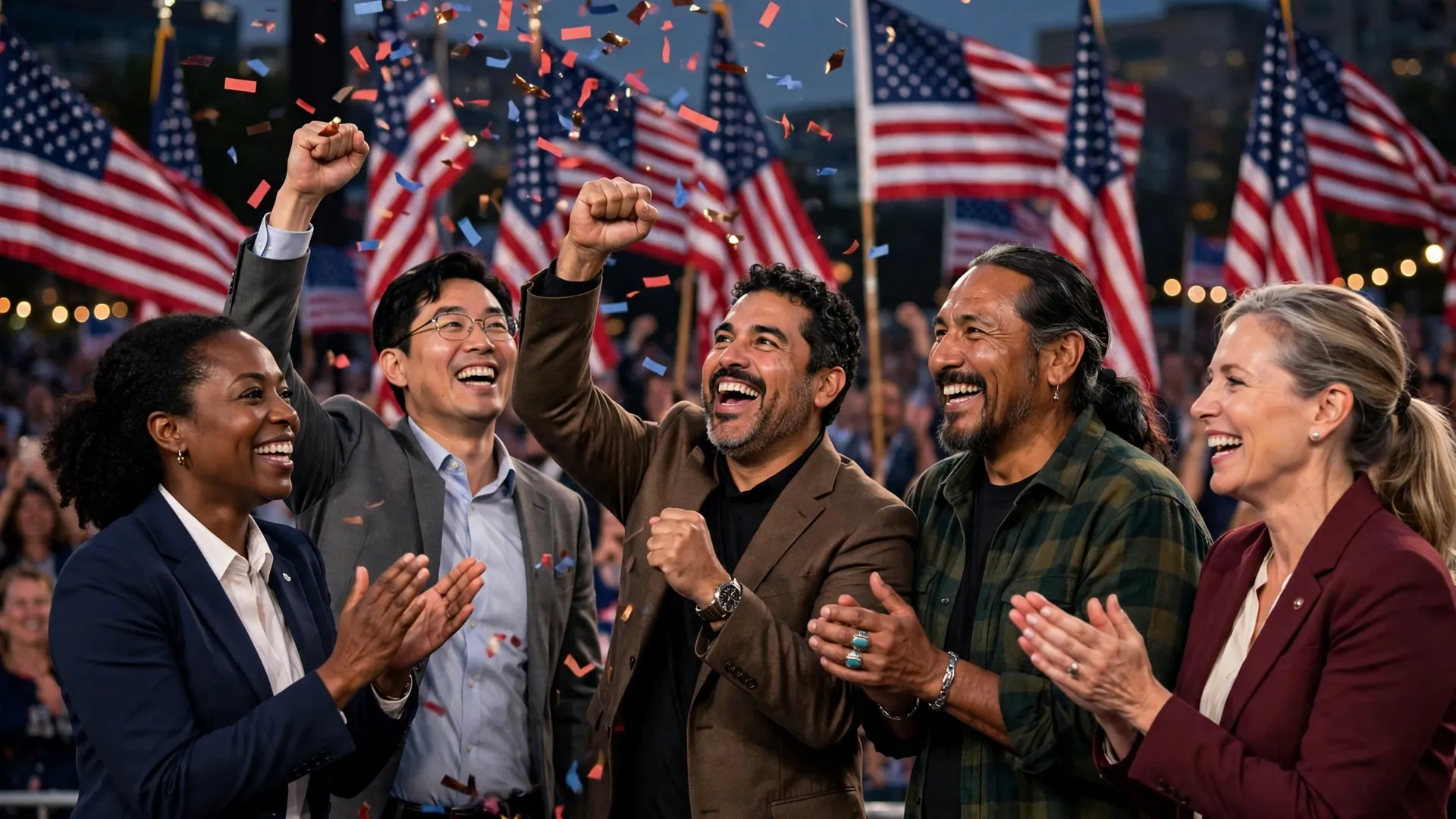
The historic firsts 2026 midterms produced will be remembered long after the seat counts are settled. On a night when Democrats swept to control of Congress, voters also elected a series of leaders from communities that had never before held some of the country’s highest offices, from Georgia’s governor’s mansion to the United States Senate.
Keisha Lance Bottoms, the former mayor of Atlanta, won the Georgia governorship to become the first Black woman elected governor of any American state, according to USA TODAY and other outlets. In Michigan, Democrat Abdul El-Sayed defeated Republican Mike Rogers to become the first Muslim elected to the United States Senate. In New Hampshire, Democratic Representative Chris Pappas defeated former Republican Senator John E. Sununu to become the first openly gay man to serve in the Senate.
And in Washington, House Minority Leader Hakeem Jeffries is in line to become the first Black Speaker of the House of Representatives after Democrats won control of the chamber. Together, the victories mark one of the most diverse election nights in American history, and they arrived as part of a broader Democratic wave that flipped seats in Texas, Kansas, South Carolina, Iowa, Ohio and North Carolina.
Georgia: Bottoms ends two decades of Republican rule
Bottoms, a Democrat, defeated Republican businessman Rick Jackson in Georgia’s gubernatorial race, according to the Telegraph’s election coverage, ending two decades of Republican control of the governor’s office. Her victory was projected on Tuesday night and confirmed in Wednesday’s coverage as one of the defining results of the election.
As Atlanta’s mayor, Bottoms built a national profile during the pandemic and the protests that followed the killing of George Floyd, and she later served in senior roles in Democratic politics. Her win in Georgia, a state that has become one of the country’s most competitive battlegrounds, underlined how far the state’s politics have shifted in the past decade.
Georgia was not the only state to break new ground in a governor’s race. In New Mexico, Deb Haaland, a former interior secretary who previously represented the state in Congress, became the first Native American woman elected governor anywhere in the country, defeating Republican Gregg Hull, according to Firstpost and AFP coverage.
Michigan: El-Sayed becomes first Muslim senator
In Michigan, El-Sayed, a doctor and former county health official, defeated Rogers in a closely contested race that drew national attention. USA TODAY reported that the campaign featured vicious verbal attacks from Rogers, President Donald Trump and even some Democrats, and that El-Sayed declared victory in a speech to supporters on election night.
El-Sayed, the son of Egyptian immigrants, will take over the Michigan Senate seat from retiring Democrat Gary Peters. His victory was projected by Fox News and Decision Desk HQ, and it gives the party’s progressive wing a prominent new voice in the Senate. Supporters described the win as a rejection of hate, a phrase used in Al Jazeera’s coverage of the result.
The Michigan result also matters for the Senate map. It was one of at least seven Democratic flips on the night, and it helped secure a projected 54-seat Democratic majority, with only Alaska and Mississippi still uncalled on Wednesday morning.
- Keisha Lance Bottoms: first Black woman elected governor of a US state, in Georgia.
- Abdul El-Sayed: first Muslim elected to the US Senate, in Michigan.
- Chris Pappas: first openly gay man elected to the US Senate, in New Hampshire.
- Deb Haaland: first Native American woman elected governor, in New Mexico.
- Hakeem Jeffries: in line to become the first Black Speaker of the House.
New Hampshire: Pappas makes Senate history
Pappas, 46, has served in the House of Representatives since 2019, and his victory over Sununu retains the New Hampshire Senate seat for Democrats while making history in the chamber. He will become the first openly gay man to serve in the Senate, according to projections from multiple outlets.
Pappas embraced his husband, Vann Bentley, as he delivered his acceptance speech at a watch party in Manchester, New Hampshire, on election night, according to AFP photographs of the event. His win was one of several in which Democrats held competitive seats while also flipping Republican-held ones elsewhere.
More historic firsts 2026 midterms across the map
The firsts extended beyond the Senate and the Georgia governor’s race. In Texas, Democrat Gina Hinojosa defeated three-term Republican Governor Greg Abbott to become the state’s first Hispanic woman governor, according to USA TODAY. In California, Democrat Xavier Becerra was elected to become the state’s first Hispanic governor.
In Florida, Republican Byron Donalds became the state’s first Black governor in a narrow victory, showing that the night’s historic results were not confined to one party. Donalds’ win was reported by multiple outlets as part of the broader set of governor results that saw Democrats flip governorships in long-Republican states while Republicans held Florida.
Jeffries’ expected rise to Speaker would cap the night. The New York Democrat has led House Democrats since 2023, and his election as Speaker in January would make him the first Black person to hold the post, one of the most powerful offices in American government. The Speaker is second in the line of succession to the presidency, after the vice president.
Historians caution that firsts alone do not change policy, and the new office-holders will face the same governing challenges as their predecessors: budgets, healthcare, housing costs and a divided federal government. But for the communities that had never seen themselves in those offices, the symbolism of November 3 is real — and, for the candidates themselves, the work of governing begins in January.