
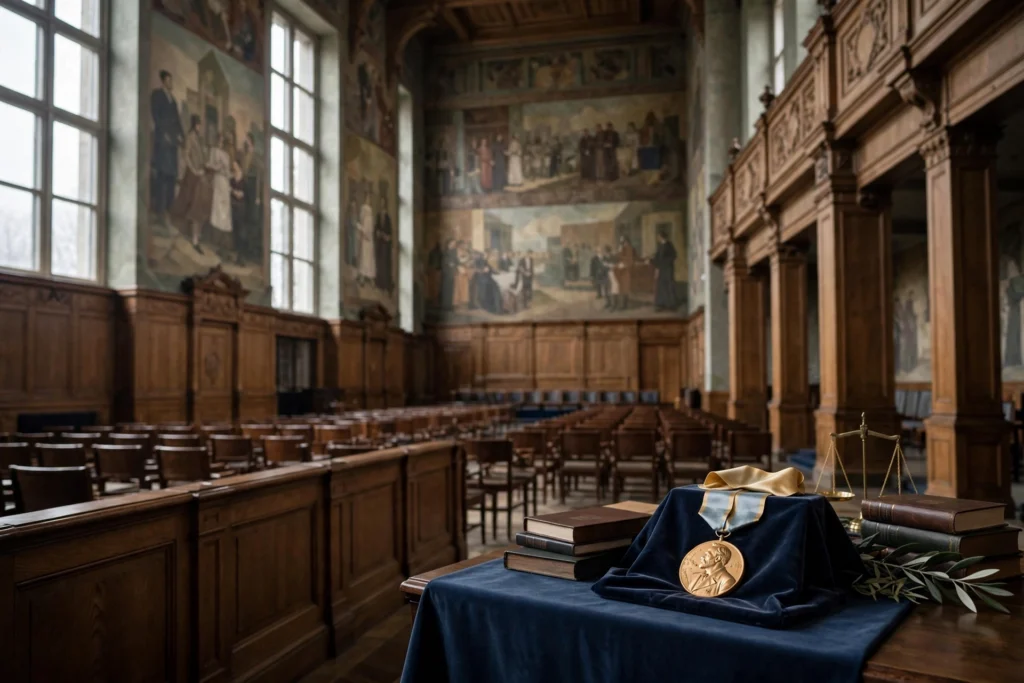
Navi Pillay Wins Nobel Peace Prize 2026 for Law Work
The Nobel Peace Prize 2026 was awarded on Friday, October 9, to South African jurist Navanethem “Navi” Pillay, the Norwegian Nobel Committee announced in Oslo, recognizing her efforts to promote peace and international law.
Pillay, 85, served as United Nations High Commissioner for Human Rights from 2008 to 2014, as a judge of the International Criminal Court and as president of the International Criminal Tribunal for Rwanda, according to Reuters and Nobel Committee materials.
Nobel Peace Prize 2026 citation
The committee said Pillay held states and national leaders accountable, brought hope to victims of violence and conflict and demonstrated a firm moral compass in her long career, according to Reuters reporting of the announcement. It traced a common thread from her early work defending opponents of apartheid to her service in major international court cases.
In its release, the committee said resolving conflicts without force depends on the international rule of law, and that holding war criminals to account is a precondition for a peaceful world, according to statements reported by NDTV and other outlets.
- Laureate: Navanethem “Navi” Pillay, 85, South African jurist
- Former UN High Commissioner for Human Rights, 2008-2014
- Former judge, International Criminal Court; president, Rwanda tribunal
- Prize: 12 million Swedish crowns, about $1.2 million, to be presented December 10 in Oslo
A career from apartheid-era Durban to The Hague
Born in Durban of Indian Tamil origin, Pillay became the first non-white woman judge of the High Court of South Africa, according to biographical summaries published after the announcement. She began her legal career defending anti-apartheid activists, including Nelson Mandela, according to the Nobel Committee.
She later served on the International Criminal Tribunal for Rwanda between 1999 and 2003, was elected to the International Criminal Court in 2003, and led the UN human rights office from 2008 to 2014, according to Reuters and the Nobel release.
More recently, Pillay chaired the UN Commission of Inquiry on the Occupied Palestinian Territory, which concluded in 2025 that Israel had committed genocide in Gaza, according to committee background reported by Haaretz and Reuters. Israel dismissed that report, according to the same coverage.
Reaction to the award
Israel denounced the decision, according to Haaretz reporting. Supporters in South Africa and in international legal circles welcomed the recognition of a career focused on accountability, according to initial reaction reported by Reuters and regional outlets.
The Nobel Committee chair, Jorgen Watne Frydnes, presented the announcement at the Norwegian Nobel Institute in Oslo on Friday. The committee said efforts to reach Pillay by phone initially were unsuccessful, according to NDTV reporting.
Nobel Peace Prize 2026 in context
The peace prize was the fifth Nobel announced this week, following literature, chemistry, physics and medicine, according to Reuters. Venezuelan opposition leader Maria Corina Machado won in 2025, the committee noted.
The award will be presented on December 10 in Oslo, the anniversary of Alfred Nobel’s death. This year marks the 125th anniversary of the peace prize, according to NDTV.
Pillay’s selection places international courts at the center of this year’s Nobel conversation, at a moment when several governments — including the United States, which announced new sanctions on the International Criminal Court the same day — are debating the authority of those institutions.
Why the committee’s language drew attention
By emphasizing judges and institutions under political attack, the committee’s release was read by several international outlets as a broader defense of multilateral legal bodies, not only a personal honor. CNN noted the committee’s wish to remind the world that the rule of law underpins the system set up to ensure peace, language the committee itself used in announcing the award.
Pillay’s tenure at the UN human rights office included reports on conflicts in Syria, Sri Lanka and elsewhere, work that drew both praise and criticism from governments at the time, according to standard biographical accounts republished Friday. Her defenders in the legal community cite her independence from governments, including her own, as a hallmark of that tenure.
In South Africa, Pillay is remembered first as a Durban lawyer who opened her own firm in Natal in 1967, the first woman to do so in the province, according to biographical summaries. That local history — from apartheid courts to The Hague and Geneva — formed the arc the Nobel Committee highlighted on Friday.
The December ceremony in Oslo will include the traditional Nobel lecture. The committee has not announced whether Pillay, at 85, will deliver it in person, and initial reports said she had not yet been reached when the prize was announced.
Pingback: Trump Nobel Peace Prize Snub: Fury Over Norway Award