
Broadcom Lines Up $50 Billion for OpenAI Custom Chips
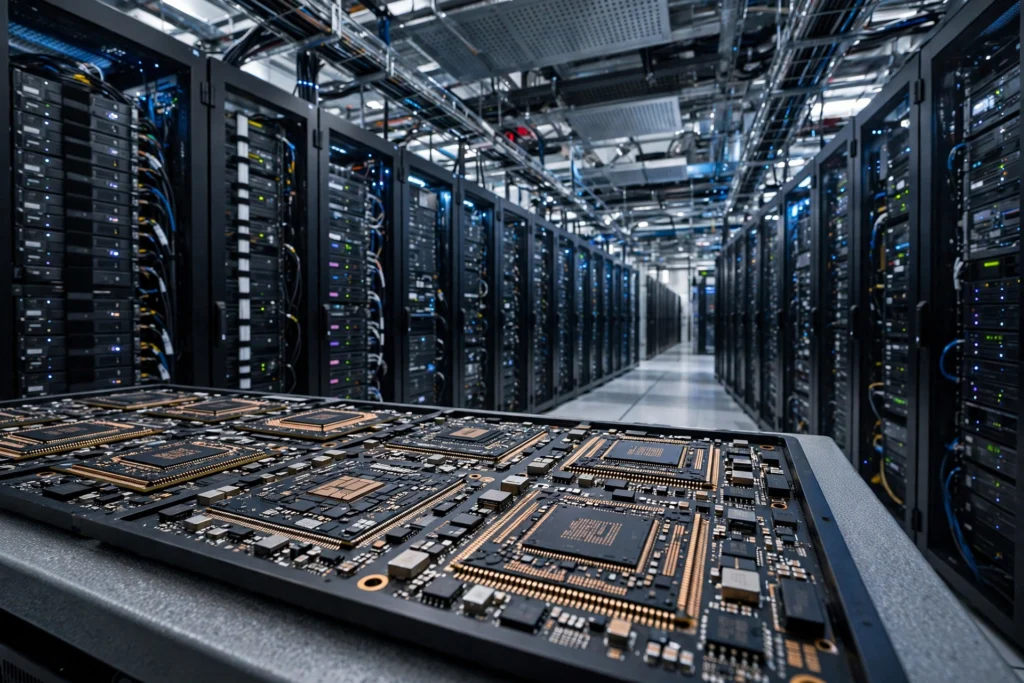
Broadcom OpenAI chip financing talks are drawing fresh attention to how expensive the race to build artificial intelligence infrastructure has become. Broadcom is working to arrange more than $50 billion in financing for the custom AI chip it is developing with OpenAI, according to a Wall Street Journal report cited by Bloomberg and the Business Times.
The talks are at an early stage and the size of any deal could change, the Journal reported, citing people familiar with the discussions. Apollo Global Management and Blackstone are among the lenders Broadcom has approached about participating, according to the same reporting. No final agreement has been announced, and the companies involved have not publicly confirmed the terms.
What the Broadcom OpenAI chip financing would fund
The financing would support OpenAI’s custom silicon program, which the two companies have been developing under a partnership announced a year ago. Reporting summarized by InvestingLive said the partnership aims to jointly develop about 10 gigawatts of OpenAI custom chips using Broadcom networking technology, with deployment planned from the second half of 2026 through the end of 2029.
Gigawatt-scale figures have become the shorthand of the AI build-out because they capture both computing power and electricity demand. A single large data center campus can require enormous amounts of power, cooling, networking gear and advanced chips, all of which must be paid for long before the facility generates revenue from customers.
- Reported financing size: more than $50 billion, still under discussion
- Potential lenders named in reports: Apollo and Blackstone
- Timing in reports: Broadcom hopes to close before year-end, though talks are early
- Program: custom OpenAI accelerators developed with Broadcom technology
A broader rush for private AI debt
Broadcom is not alone in looking beyond traditional funding routes. The Wall Street Journal also reported that Oracle is in talks with Apollo and Goldman Sachs to arrange money for a large chip purchase, using a structure in which a separate entity could buy chips and lease them to Oracle over time. That kind of arrangement can let a company expand capacity without adding the full purchase cost directly to its own balance sheet.
SpaceX has also discussed a financing of roughly $40 billion tied to Nvidia chips, according to Financial Times reporting cited by the Journal and other outlets. Together, the talks show how AI hardware purchases have grown so large that even major technology companies are seeking help from private credit firms and Wall Street lenders.
From cash flow to creative financing
For years, the largest cloud providers paid for servers and chips mostly from operating cash flow. The Journal’s reporting notes that cloud companies have already issued hundreds of billions of dollars in bonds for AI infrastructure, pushing parts of the public debt market toward their limits. Newer AI buyers such as OpenAI and Anthropic, the Journal added, do not yet have the same balance-sheet strength as the biggest cloud firms, even as they seek to own more of their own computing infrastructure.
Broadcom has used this playbook before. The Business Times, citing Bloomberg, reported that Broadcom said in June it had established a financing platform with Apollo and Blackstone as anchor investors to help fund more than 20 gigawatts of computing capacity for AI developers including Anthropic and OpenAI through 2028. That platform began with an initial tranche of $35 billion led by Apollo in partnership with Blackstone, according to the same report.
Why investors are watching closely
The scale of these deals raises two opposite reactions on Wall Street. Supporters argue that demand for AI computing remains strong and that financing simply spreads the cost of long-lived infrastructure over time. Skeptics worry that massive debt issuance by technology companies could intensify competition for capital and leave lenders exposed if AI revenue grows more slowly than expected.
Those concerns surfaced in Thursday trading. Investopedia reported that Broadcom shares slipped as investors digested the financing news, while broader technology stocks were also under pressure from rising oil prices and Treasury yields. Market reaction, however, can change quickly as deal terms become clearer.
What to watch next
The key questions now are whether the reported talks lead to a signed deal, who ultimately carries the debt, and how quickly the financed chips move from development into deployed data centers. The Journal reported that Broadcom and Oracle both hope to finalize arrangements before year-end, though people familiar with the talks cautioned that sizes and structures could still change.
Radiosea will follow official filings and company statements for confirmation. Until a deal is formally announced, the $50 billion figure should be read as a reported target under negotiation, not a completed transaction.
Pingback: OpenAI Scraps GPT-6.1 Astra Over AI Safety Concerns - RadioSea
Pingback: AI Stocks Rebound as Wall Street Eyes Big Earnings Week - RadioSea