
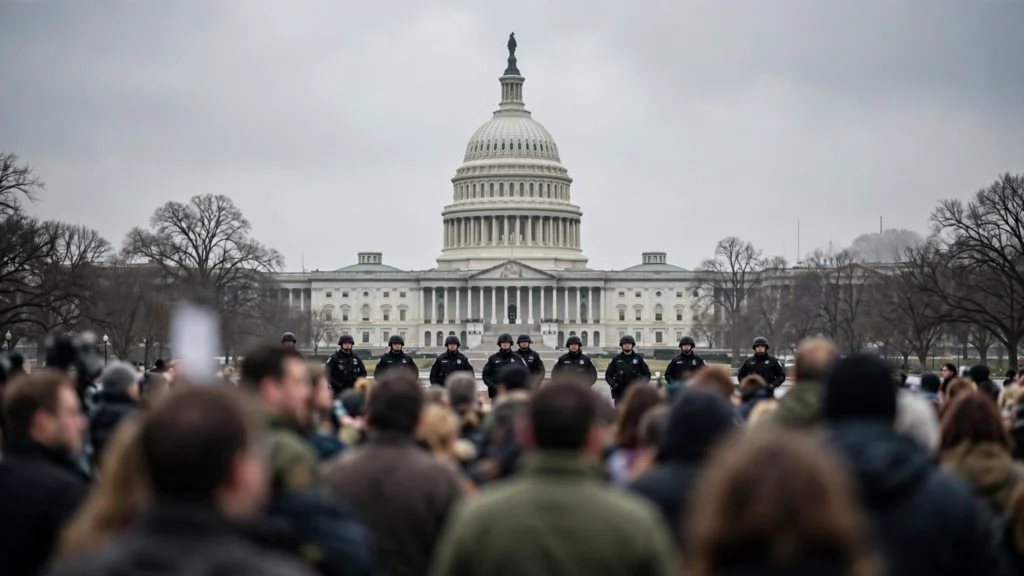
Trump Immigration Policy: ACLU Report Warns on Democracy
The Trump immigration policy agenda is facing a comprehensive new challenge after the American Civil Liberties Union published a lengthy report on Tuesday arguing that mass deportation has become a vehicle for broader changes to civil liberties and democratic checks. According to USA Today and the ACLU’s own release, the 139-page document catalogues 76 steps the organization attributes to the administration over roughly the past 20 months.
The report arrives with the November 3 midterm elections weeks away. Control of the House and Senate will determine how much of the president’s second-term agenda can move through Congress, and immigration enforcement has remained one of the most contested issues of the campaign. USA Today reported that the White House and the Department of Homeland Security had been asked for comment on the findings.
Trump Immigration Policy and the Report’s Main Claims
The ACLU describes deportation policy as serving several purposes at once: a stated enforcement goal, a distraction from other actions, and a legal rationale for expanding executive authority. In the organization’s framing, the effects extend beyond noncitizens to journalists, protesters, and other Americans.
Among the findings highlighted in coverage of the release:
- A shift in Immigration and Customs Enforcement tactics from large, visible raids toward more discrete arrests, which the ACLU says followed public backlash
- Use of federal agents and military personnel in domestic immigration enforcement in U.S. cities
- Mass revocation of visas and other forms of lawful status
- Cases in which people were sent to detention or prisons in countries the ACLU says they had never lived in
- Disputes over whether administration officials complied with court orders in deportation litigation
The ACLU organizes its criticism into three overlapping categories: attacks on civil rights and liberties, including free speech, assembly, and due process; attacks on democratic checks and balances, including the expansion of federal enforcement power; and what it characterizes as the normalization of harsh enforcement practices. These are the organization’s characterizations, and the administration has historically defended its program as lawful enforcement of immigration statutes passed by Congress.
Why the Timing Matters Before the Midterms
Releasing a report of this scale in early October places it squarely in the closing stretch of the midterm campaign. Top Democrats, according to USA Today, are warning that the administration is laying groundwork to interfere with ballots, a claim Republicans dispute. The ACLU report does not function as a campaign document, but its conclusions align with arguments Democratic candidates have been making about executive power.
For Republican candidates, immigration enforcement has generally polled as a relative strength, and the administration has pointed to border crossings and removal numbers as evidence the policy is working. The competing narratives mean the same enforcement actions are being presented to voters in sharply different ways depending on the source.
What the Report Does and Does Not Do
A report, even a detailed one, does not change law. Its practical effects are indirect: it can supply arguments and documentation for ongoing litigation, shape media coverage, and give lawmakers a reference point in oversight debates. The ACLU is already involved in multiple lawsuits challenging administration immigration actions, including disputes over detention conditions and compliance with court orders, according to its press releases.
Courts, rather than advocacy reports, will decide the legal questions. Several challenges to detention and removal policies are working through federal courts, and the Supreme Court has agreed to hear a challenge involving mandatory detention policy, according to the ACLU.
How the Administration Has Defended Its Approach
While the White House had not responded in the initial USA Today coverage, administration officials have consistently argued that they are enforcing existing law, prioritizing people with criminal records, and reversing policies they describe as overly permissive. Supporters also argue that due process in immigration proceedings differs from criminal proceedings as a matter of longstanding law.
Critics counter that the scale and speed of the current program, combined with deployments in U.S. cities, go beyond routine enforcement. That disagreement — over whether current actions are ordinary enforcement or a structural shift — is the core dispute the report is trying to settle in public debate.
What to Watch Next
Three things will determine whether the report has lasting impact. First, whether any of its specific claims become central in the ACLU’s active court cases. Second, whether congressional committees take up its findings in hearings before or after the midterms. Third, whether the midterm results change the balance of oversight power in Washington.
For voters, the practical takeaway is narrower: immigration enforcement is not only a border issue in this election. According to the ACLU’s account, it now touches detention policy, visa status, protest rights, and the relationship between federal agents and American cities. Whether voters accept that framing or the administration’s law-enforcement framing may help decide close races in November.
Pingback: US Suspends Microsoft, Adobe From Green Card Program - RadioSea
Pingback: Man Wounded in Bronx ICE Shooting With Child in Car - RadioSea
Pingback: Navi Pillay Wins Nobel Peace Prize 2026 for Law Work
Pingback: US Sanctions International Criminal Court in Sweeping Move