
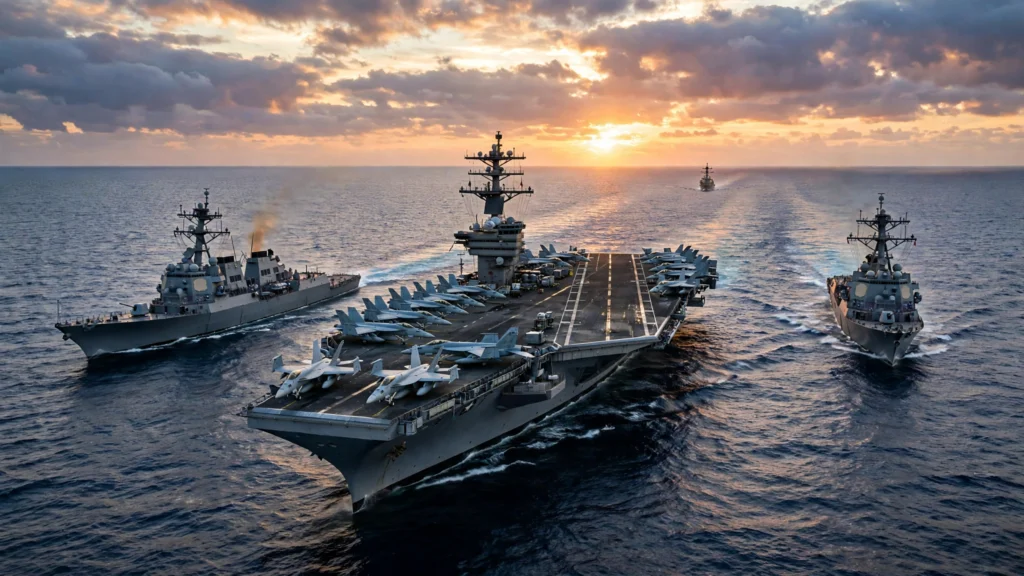
US Sends Third Carrier Group to Middle East, 10,000 Troops
The Pentagon is deploying a third carrier strike group to the Middle East, adding 9,000 to 10,000 sailors and Marines to a region already hosting more than 50,000 U.S. troops, according to U.S. officials who spoke with the Wall Street Journal, Al Jazeera and The National.
The USS Theodore Roosevelt carrier strike group left its San Diego home port on Sunday, followed a day later by the Makin Island Amphibious Ready Group carrying more than 2,000 Marines from the 13th Marine Expeditionary Unit. The ships are expected to arrive by the end of November.
What the Third Carrier Strike Group Deployment Includes
The Roosevelt, a Nimitz-class nuclear-powered carrier, sails with its air wing, destroyers and the guided-missile cruiser USS Chosin. The Makin Island group includes three amphibious ships, including USS John P. Murtha and USS Anchorage, according to Gulf News reporting.
- USS Theodore Roosevelt departed San Diego Sept. 27
- Makin Island Amphibious Ready Group departed Sept. 28
- Combined addition: 9,000 to 10,000 personnel
- Expected arrival: end of November
Two carriers, the USS George H.W. Bush and USS George Washington, are already in the region, along with ships from the USS Boxer Amphibious Ready Group. If the Washington remains when the Roosevelt arrives, it will be the first time since April that three carrier strike groups operate in the Middle East at once.
Timing Amid an Eighth Month of War
The deployment comes as the U.S.-Iran war enters its eighth month. Fighting began on February 28, a fragile ceasefire later collapsed, and the two sides have fought sporadically since, according to the Wall Street Journal.
President Donald Trump told the UN General Assembly last week that he faces a choice between pursuing a deal with Iran or driving it into hell, suggesting Tehran might reach an agreement after the November 3 midterm elections but also saying he might annihilate the regime. In a media interview published Thursday, Trump said it is possible the U.S. could resume attacks on Iran after the midterms, according to officials cited by the Journal and Japan Times.
Iranian President Masoud Pezeshkian said Thursday that Tehran has never shied away from talks and never will, The National reported. The two sides held indirect talks on the sidelines of the UN General Assembly in New York last week.
Why Three Carriers Matters
Carrier strike groups bring fighter jets, surveillance aircraft, missile defenses and thousands of personnel in a single formation. Concentrating three in one region is one of the largest displays of U.S. naval power since the 2003 invasion of Iraq, according to Gulf News.
Officials stressed the Roosevelt movement is a scheduled deployment, but also said the crew prepared for a longer-than-normal stay, stocking additional food, hygiene and retail supplies and improving communications with families before departure, the New York Post reported.
It remains possible the Washington, normally based in Japan, will return home once the Roosevelt arrives, bringing the force back to two carriers. Pentagon and White House spokespeople did not respond to requests for comment in the Journal’s reporting.
What to Watch Next
The arrival timeline puts the enlarged force in place just after the midterm elections, the same window Trump has mentioned for potential renewed strikes if no deal is reached. At the same time, diplomatic channels remain formally open.
For regional governments and energy markets, the signal is twofold: Washington is increasing its options for escalation while keeping pressure on Tehran to negotiate. Whether the third carrier strike group becomes a relief rotation or a lasting three-carrier presence will be the clearest indicator of which path the administration intends to take into winter.
Naval analysts note the deployment also tests readiness after reports of deteriorating conditions aboard the USS Abraham Lincoln during its long deployment, which it completed before being relieved by the George Washington in August. The Navy’s acting secretary disclosed last week that eight service members in that strike group had attempted to take their own lives. Officials say lessons from that deployment shaped the Roosevelt’s preparations, including larger stocks of supplies and better connectivity for crews expecting an extended stay in theater.
Energy markets are watching the deployment alongside diplomatic signals. Europe agreed this week to release diesel stockpiles to the United States, according to President Trump, a move aimed at lowering fuel prices before the midterms. Analysts say a larger carrier presence can reassure shipping through contested waters even without new strikes, though any resumption of bombing would quickly test how long three carriers can be sustained in theater.
Pingback: US Sends Third Aircraft Carrier to Middle East Amid Iran War - RadioSea
Pingback: US Troops Iraq Withdrawal: 12-Year Mission Ends, What's Next – RadioSea
Pingback: US Troops Iraq Withdrawal: Last Bases Empty by September 30 - RadioSea