
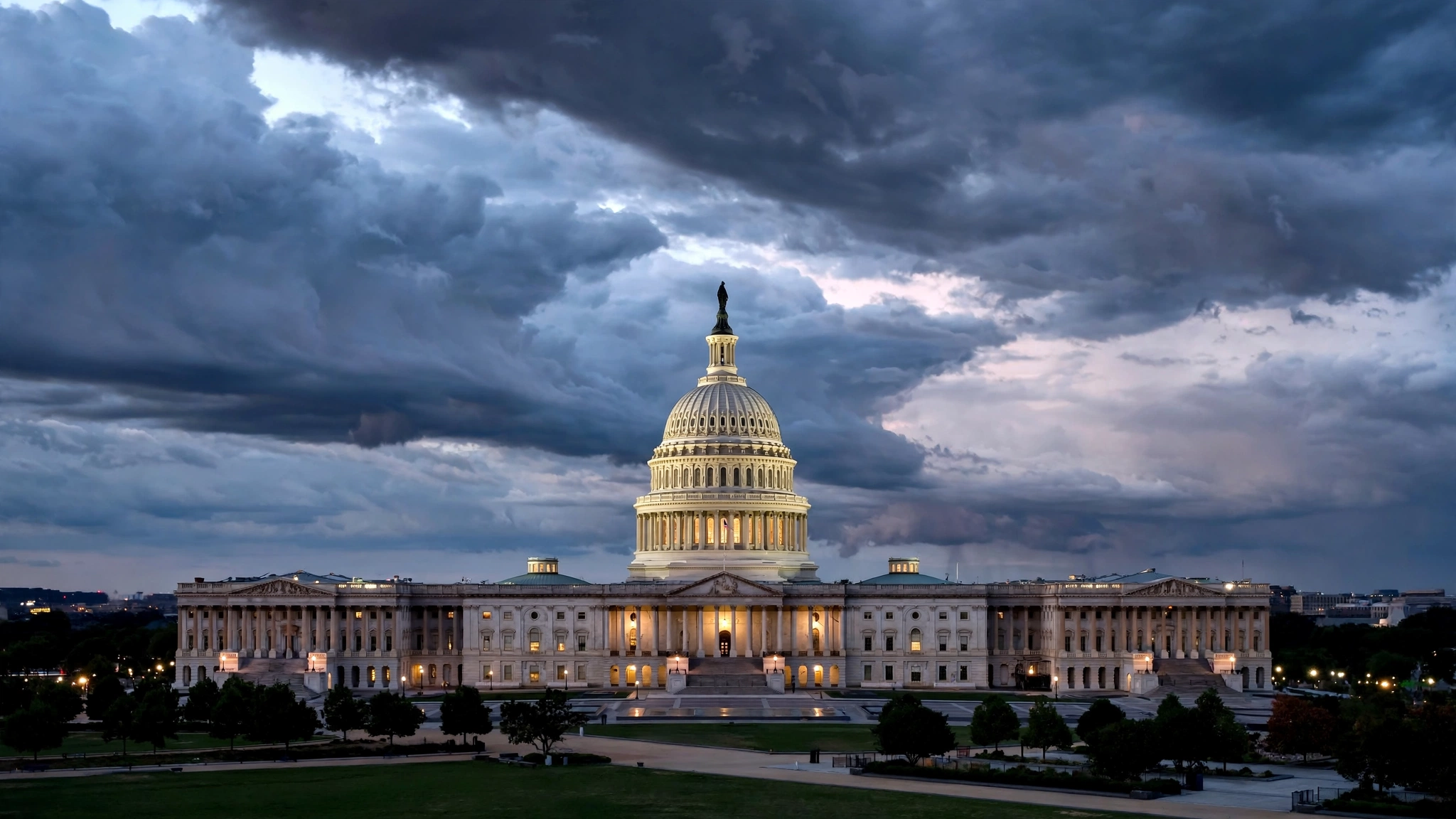
The December 11 shutdown deadline is less than two weeks away, and Congress has no funding deal, no stopgap text, and only about eight legislative days left to prevent another lapse in federal funding.
Federal agencies are funded through 11:59 p.m. Eastern on Friday, December 11, 2026, under a continuing resolution signed into law on September 2. If Congress does not enact full-year spending bills or another stopgap by then, a funding gap begins on December 12, and a shutdown of the affected agencies can follow.
Congress is out for Thanksgiving and returns on Monday, November 30. As of the latest checks on November 25, no continuing-resolution text had been released in either chamber.
December 11 shutdown deadline and the stopgap on the table
The most likely outcome, according to Capitol Hill reporting, is another stopgap — a continuing resolution that freezes most government spending at current levels and pushes the deadline into next year.
The White House sent Congress its list of requested changes for the stopgap on November 23. The administration wants the next continuing resolution to run through March 31, 2027, according to reporting by Punchbowl News and The Center Square, and it is asking for several additions on top of flat funding.
The list includes an extra $5 billion for construction of the “Golden Dome,” the homeland missile defense system that has faced multiple delays and fluctuating cost estimates. It also seeks faster spending authority for missiles and “Trump-class” battleships, about $21.3 billion cumulatively for submarine procurements, roughly $2 billion for NASA’s Artemis program, and $50 billion in aviation funding.
The White House also wants the stopgap to delay a wide-scale ban, set to take effect in December, on the nearly unrestricted sale of hemp-derived cannabinoid products. Some Republicans have raised concerns about that request, while other items, such as air traffic control infrastructure funding, are expected to draw bipartisan support.
Congress is not legally required to attach any of the White House’s asks to a funding bill. As of Tuesday, congressional leaders had not commented on whether they would proceed immediately with a continuing resolution, or how long it would last.
Why the length of the stopgap matters
How long the next stopgap runs has become the central fight, because it decides who controls the next round of spending negotiations.
Democrats won control of both the House and the Senate in the November 3 midterm elections, according to Associated Press race calls. They will hold a 56-44 majority in the Senate when the new Congress begins in January, and had picked up 42 House seats as of November 17. Republicans keep both chambers until then, so the December 11 deadline belongs to a lame-duck Congress whose majority is on its way out.
A continuing resolution through March would punt the funding fight into next year, when Democrats hold majorities in both chambers and would have more say in the fiscal year 2027 full-year funding bills. A short stopgap, running to mid-January, would give the incoming majority a new deadline to use as leverage almost immediately.
Rosa DeLauro, the top Democrat on House Appropriations, has said she wants the stopgap to be as short as possible. Representative Mike Simpson, a Republican from Idaho, said simply: “We’re going to have to pass a continuing resolution.” The real argument, he added, is over how long it lasts.
Where the spending bills stand
Not one of the 12 regular fiscal year 2027 spending bills has been enacted, according to Congress.gov. The House has passed three of its twelve bills — Agriculture, Military Construction-Veterans Affairs, and National Security-State — while the Senate has passed none.
Senate Appropriations released draft text for five bills on November 12 and the remaining five on November 16, but none has reached a floor vote. The current funding law, Public Law 119-103, passed the Senate 90-6 on August 8 and the House 370-48 on September 1.
A recent history of shutdowns
The stakes are familiar. Fiscal year 2026 has already included a record 43-day funding lapse from October 1 to November 12, 2025, a short partial shutdown from January 31 to February 3, 2026, and a Department of Homeland Security-only lapse from February 14 to April 30.
History suggests the deadline will be extended rather than missed. In all six midterm lame-duck sessions since 2002, the first funding deadline after the election was extended, according to a House Budget Committee analysis updated November 18.
Still, with Congress returning on November 30 and the clock running, the window for a deal is narrow. A short lapse is considered less likely than another stopgap, but it remains possible if the two sides cannot agree on the length of the extension or the White House’s add-ons.