Hurricane Polo: California Emergency as Storm Hits Baja
Hurricane Polo slammed into Mexico’s Baja California peninsula early Tuesday as a Category 2 storm, bringing damaging winds and life-threatening flash flooding — days after peaking as a monster Category 5 hurricane, one of the strongest ever recorded in the eastern Pacific. California Governor Gavin Newsom has declared a state of emergency as the storm’s moisture threatens dangerous flooding across the American Southwest.
The National Hurricane Center said Polo made landfall on Baja California Sur with destructive wind gusts and torrential rain, and was forecast to make a second landfall on mainland Mexico later Tuesday after tracking over the Gulf of California.
Hurricane Polo’s Path: From Category 5 to Baja Landfall
At its peak, Hurricane Polo reached extraordinary intensity, with top sustained winds of 180 mph and central pressure dropping to about 892 millibars, according to the New York Post — placing it among the most intense eastern Pacific hurricanes ever measured. NASA described it as one of the strongest storms the basin has ever seen.
The storm weakened before landfall but remained dangerous. Forecasters expected it to drop 6 to 12 inches of rain across Baja California Sur and parts of Sonora, triggering life-threatening flooding and mudslides, particularly in steep terrain. A hurricane warning was in effect across central Baja California.
Dramatic footage shared by NOAA’s Hurricane Hunters showed a WP-3D aircraft plunging through Polo’s violent eyewall, rattling violently before emerging into an eerie pocket of calm inside the eye.
California Declares a State of Emergency
Due to the storm’s proximity, Governor Newsom declared a precautionary state of emergency, saying the action was about “giving communities the support they need, giving first responders the tools to do their jobs, and giving families the confidence that their state is ready.”
His office said the state is preparing for what is shaping up to be a historic El Niño season, forecast to be very strong — potentially the strongest on record.
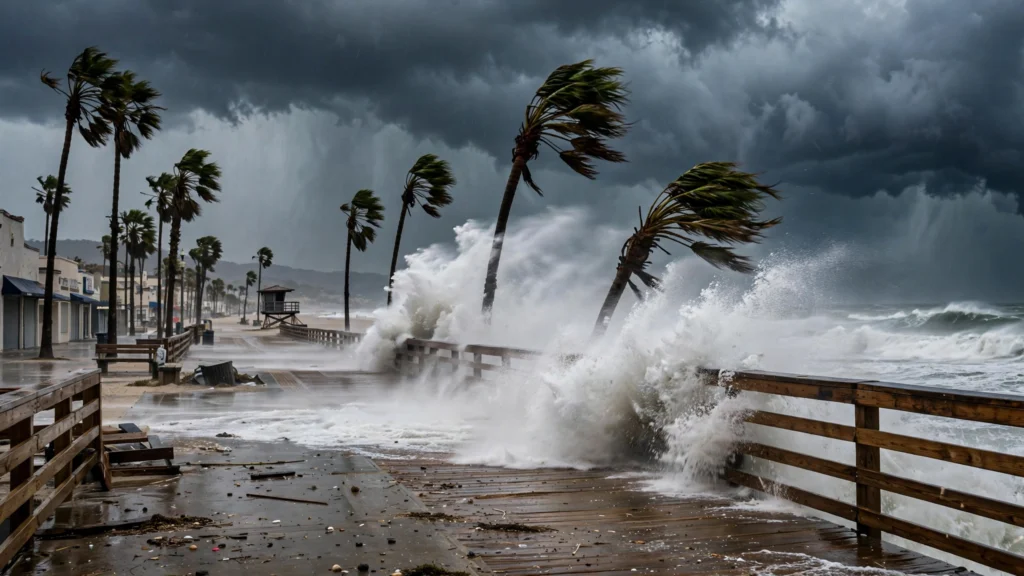
Along the Southern California coast, the threat came from the ocean rather than the sky. Powerful swells generated by Polo — combined with swells from Hurricane Odalys — produced dangerous surf, significant beach erosion, and life-threatening rip currents from Long Beach to Malibu, according to the National Weather Service.
In Long Beach and Seal Beach, crews reinforced sand berms, prepared sandbags and pumps, and removed lifeguard stands from eroded stretches of beach. Wildlife officials even relocated two newly discovered olive ridley sea turtle nests from Seal Beach and Huntington Beach to the Aquarium of the Pacific in Long Beach, citing the dangerous surf and high tides.
Southwest US Braces for Flooding
Moisture streaming north from Hurricane Polo is fueling a serious flood threat across the southwestern United States. Forecasters warned of life-threatening flash flooding and mudslides, with the storm’s remnants expected to track east and douse Arizona, Utah, New Mexico, and Texas with inches of rain.
The FOX Forecast Center warned that burn-scar areas face especially high risk, as charred hillsides can turn even moderate rainfall into deadly debris flows. Desert communities, where dry washes can become raging rivers in minutes, are under particular threat, and emergency managers across the region have urged residents to avoid driving through flooded roadways.
Tropical Storm Rachel Follows Behind
Polo is not alone. Tropical Storm Rachel was located about 250 miles southwest of Acapulco on Tuesday with maximum sustained winds of 60 mph, and forecasters said gradual strengthening was expected, with Rachel likely to become a hurricane within a day or so.
The back-to-back systems cap a brutal stretch for the Pacific. Hawaii has already been battered by multiple hurricanes this season, including Nolo, which left two people dead and damaged more than 200 homes, according to local officials cited by The Sun.
How to Stay Safe
- Never drive through flooded roads. Just six inches of moving water can knock a person down; a foot can sweep away a vehicle.
- Avoid beaches and piers in Southern California while high-surf warnings are in effect — stay off rocks and jetties.
- In the Southwest, watch for flash flood warnings, especially near burn scars, canyons, and normally dry washes.
- Check forecasts from the National Hurricane Center and National Weather Service before traveling in affected areas.
Officials urge residents from the California coast to the desert Southwest to remain alert through the week as Polo’s remnants and Rachel’s development unfold.