
Hegseth Cuts Generals, Admirals by 20% in Pentagon Shake-Up
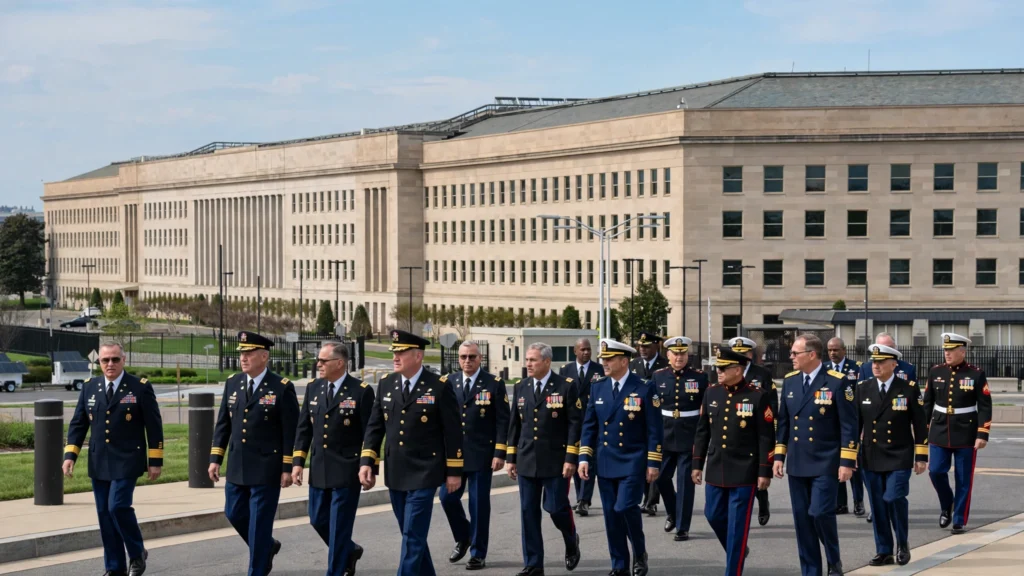
Defense Secretary Pete Hegseth confirmed this week that the Hegseth generals cut will reduce the number of generals and admirals across the United States military by 20 percent, a sweeping change he described as long overdue accountability at the top of the Pentagon.
Speaking during his State of the Force address at Marine Corps Base Quantico in Virginia, Hegseth told junior officers and enlisted leaders that about 10 percent of flag officers have already been fired and another 10 percent of general officer slots will be eliminated. The combined reduction is targeted for completion by January 1, according to Pentagon officials.
What the Hegseth Generals Cut Includes
The reduction applies to one- to four-star generals and admirals across the Army, Navy, Marine Corps, Air Force and Space Force. As of July, there were 851 active-duty generals and admirals, close to the federal cap of 857, according to Defense Department figures cited by Reuters and the Associated Press.
A 20 percent reduction would remove roughly 170 top posts. Rather than only firing individuals, officials said some future billets will be downgraded in rank while others will be canceled entirely as part of a broader restructuring.
- About 851 generals and admirals are currently on active duty
- The plan combines firings with elimination of future slots
- The target completion date is January 1
- A new Autonomous Warfare Command is slated to become a combatant command by October 2027
Hegseth said officers who responded positively to his direction last year are now leading what he called newly focused formations, while those who did not are no longer in their roles.
A Second Year of Culture Change at Quantico
The Quantico address has become an annual fixture under Hegseth. Last September, he summoned top brass on short notice and criticized the department as too focused on diversity initiatives, arguing that physical standards and warfighting had slipped.
This year, speaking to a younger audience, he reiterated themes of gender-neutral fitness standards for combat roles, a rollback of diversity, equity and inclusion programs, grooming directives including a ban on beards, and mandatory fitness testing. He also mentioned an effort to monitor testosterone levels among service members.
Administration supporters cast the speech as an overhaul aimed at refocusing the military on combat readiness. Critics, including civil liberties and religious freedom groups, called the remarks politically charged and said several directives raise legal and constitutional questions.
Reaction on Capitol Hill
Several senators described the move as a purge that could take years to rebuild, according to reporting from the Associated Press. Supporters in the administration countered that the Pentagon had accumulated too many senior billets and that reducing layers of command would speed decision-making.
The debate reflects a long-running question in defense policy: how many senior officers does a modern force need, and who decides which billets are essential. Hegseth framed the answer as a matter of civilian control and accountability.
Why the Cut Matters Beyond the Pentagon
Changes at the flag-officer level ripple through promotions, assignments and strategy for years. Fewer senior slots mean tighter competition for colonels and Navy captains hoping to advance, and it can reshape which commands receive a three- or four-star leader.
The timing also matters. The United States is seven months into a war with Iran, has expanded operations in Latin America and the Middle East, and is standing up new structures for autonomous warfare. Supporters argue a leaner top ranks will be more agile. Critics argue experience is being lost at a moment of high operational tempo.
Pentagon officials said additional initiatives and directives will roll out on different timelines in the coming months, with the general officer reduction as the centerpiece announcement.
For now, the Hegseth generals cut stands as the clearest signal yet of how far the secretary intends to reshape the institution, and the argument over whether it strengthens or hollows the force is likely to follow the Pentagon into the new year.
The speech also touched on artificial intelligence and autonomous warfare, two areas where the Pentagon says it wants to move faster. Officials said the Autonomous Warfare Command will grow into a full combatant command by October 2027, overseeing unmanned systems across services. Supporters argue pairing that expansion with fewer senior billets forces clearer ownership of programs, while critics worry the department is centralizing too many decisions at the top while cutting the very officers meant to execute them.
Pingback: Coast Guard Searches for Missing Jet Off Nantucket
Pingback: US Sends Third Aircraft Carrier to Middle East Amid Iran War - RadioSea
Pingback: Hegseth Midterm Elections Memo Orders Cyber Defense of Vote - RadioSea