
US measles elimination status has been lost after 26 years, following more than a year of continuous spread of the virus across the country. A Pan American Health Organization (PAHO) expert committee decided on November 13 that the United States no longer qualifies as a country that has eliminated measles, according to reports from the Wall Street Journal, Reuters and other outlets, with a formal announcement expected on Tuesday, November 17.
The decision ends a public health achievement dating back to 2000, when the United States was declared free of sustained measles transmission after decades of widespread vaccination. It comes as the country battles its worst measles resurgence in more than three decades, with 5,412 confirmed cases reported in 2026 as of November 12, according to the Centers for Disease Control and Prevention (CDC) — the highest annual total since 1991.
How the US lost its measles elimination status
Elimination does not mean zero cases. It means the virus is no longer spreading continuously inside a country, and new cases mostly begin with travellers who caught the disease abroad. A country loses the status when the same strain of the virus keeps circulating from person to person without a break for at least 12 months — the threshold PAHO uses to judge whether transmission has become re-established.
PAHO’s regional commission on measles and rubella elimination, which met from November 10 to 13, reviewed epidemiological and laboratory evidence and concluded that the same measles strain had been spreading uninterrupted in the United States for more than 12 months. The review had been delayed from April to November to allow more time for genomic analysis of the transmission chains. The United States withdrew from the World Health Organization but remains a member of PAHO, its regional branch for the Americas.
The CDC had confirmed 5,182 cases through November 5, with infections reported across 45 states, New York City and Washington, DC. Since the start of 2025, there have been 7,701 confirmed cases in the United States, and at least 13 measles-associated deaths have been reported since 2025, according to figures cited by multiple outlets. Pennsylvania has been at the centre of the outbreak, recording 1,561 confirmed cases as of November 16 and a seventh measles-related death in the state.
The human cost behind the numbers
The resurgence has hit some of the most vulnerable Americans hardest. Thirteen babies were born with congenital measles in the United States from the start of 2025 through September 2026, according to CDC figures published alongside a New England Journal of Medicine Evidence alert, and 112 cases were counted in pregnancy — 98 percent of them in patients with no vaccine doses or unknown vaccination status.
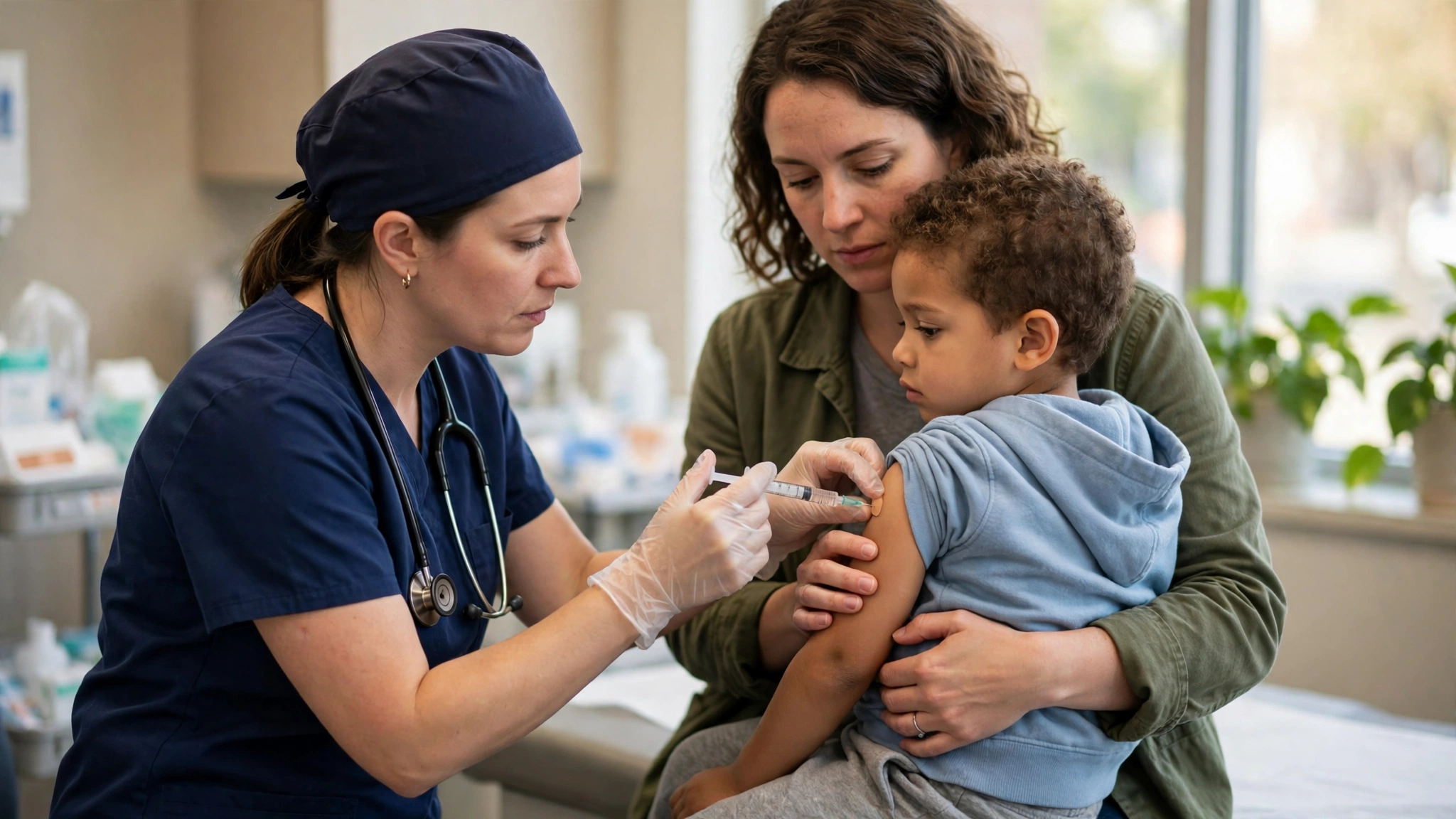
Measles is one of the most contagious viruses known. It spreads through the air when an infected person coughs or sneezes, and the virus can linger in the air for up to two hours. Before the vaccine era, measles killed hundreds of Americans each year and hospitalised tens of thousands. The measles, mumps and rubella (MMR) vaccine, given in two doses, is about 97 percent effective at preventing the disease, according to the CDC — but protection depends on high vaccination coverage, and rates have fallen in many communities in recent years.
CDC Director Dr. Erica Schwartz told Reuters that the agency would not change its response to measles outbreaks if the United States lost its elimination status, and that outbreak control work would continue as before. Health officials stress that the practical steps are unchanged: identify cases quickly, trace contacts, and vaccinate people who are unprotected.
What happens next
- Formal announcement: PAHO is expected to announce the decision formally on Tuesday, November 17, after its director is notified of the commission’s findings.
- Regaining the status: The United States can win the label back, but only after stopping sustained transmission and remaining free of new outbreaks for at least 12 months — a clock that has not yet started.
- A wider pattern: Canada, Spain and the United Kingdom recently lost their measles-elimination status after similar reviews by World Health Organization experts, pointing to a broader slide in vaccination coverage across high-income countries.
- Outbreak response: State health departments, led by Pennsylvania and other heavily affected states, continue contact tracing, isolation of cases and vaccination drives in communities where coverage has slipped.
The loss of the status is a symbolic blow as much as a practical one. It marks the first time in a generation that measles has been able to sustain itself on American soil — and it is a reminder that a disease declared beaten a quarter of a century ago can return when vaccination coverage falls. For families, the advice from health officials is unchanged and straightforward: check vaccination records, make sure children have both MMR doses, and seek care quickly if measles symptoms appear after a possible exposure.